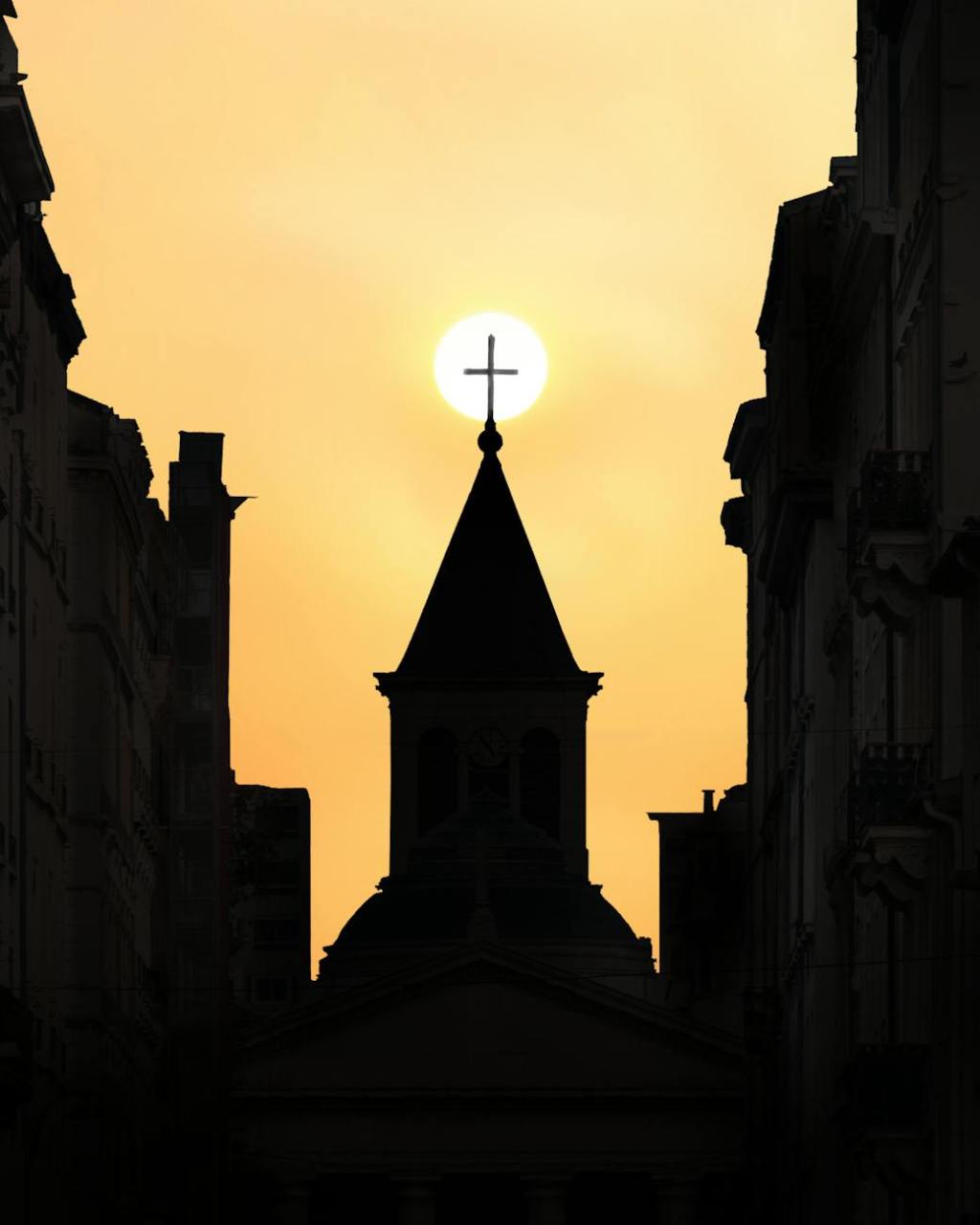
Sacrifice in the Village

“There is therefore now no condemnation for those who are in Christ Jesus.” – Romans 8:1
In the hills of West Africa, long before colonizers drew borders and cities sprouted, there lived a village known for its justice. The elders would gather under the baobab tree to settle disputes. Their judgments were fair, their punishments swift. But one day, something unexpected disrupted their tradition.
A young woman named Adebayo stood trembling before the elders. A prized pot had been stolen from the home of a respected elder, and all evidence pointed to her. The village whispered. She had always been quiet, poor, and easily overlooked. A perfect scapegoat.
The trial was brief. The pot was found buried near her home. The punishment? Exile. Adebayo would be cast out to wander beyond the edge of the village, where wild beasts and worse things waited.
But just before the sentence was passed, an older woman stepped forward. She was not family. She had no obvious reason to interfere. But with steady eyes, she spoke:
“If someone must leave so the village can be clean, let it be me. I will go in her place.”
Gasps rippled through the crowd. No one had ever heard of such a thing. Yet the elders, struck by the woman’s courage—and perhaps their own uncertainty—allowed it.
The woman walked out of the village alone. Adebayo remained—forever changed by mercy.
Sacrifice of Christ
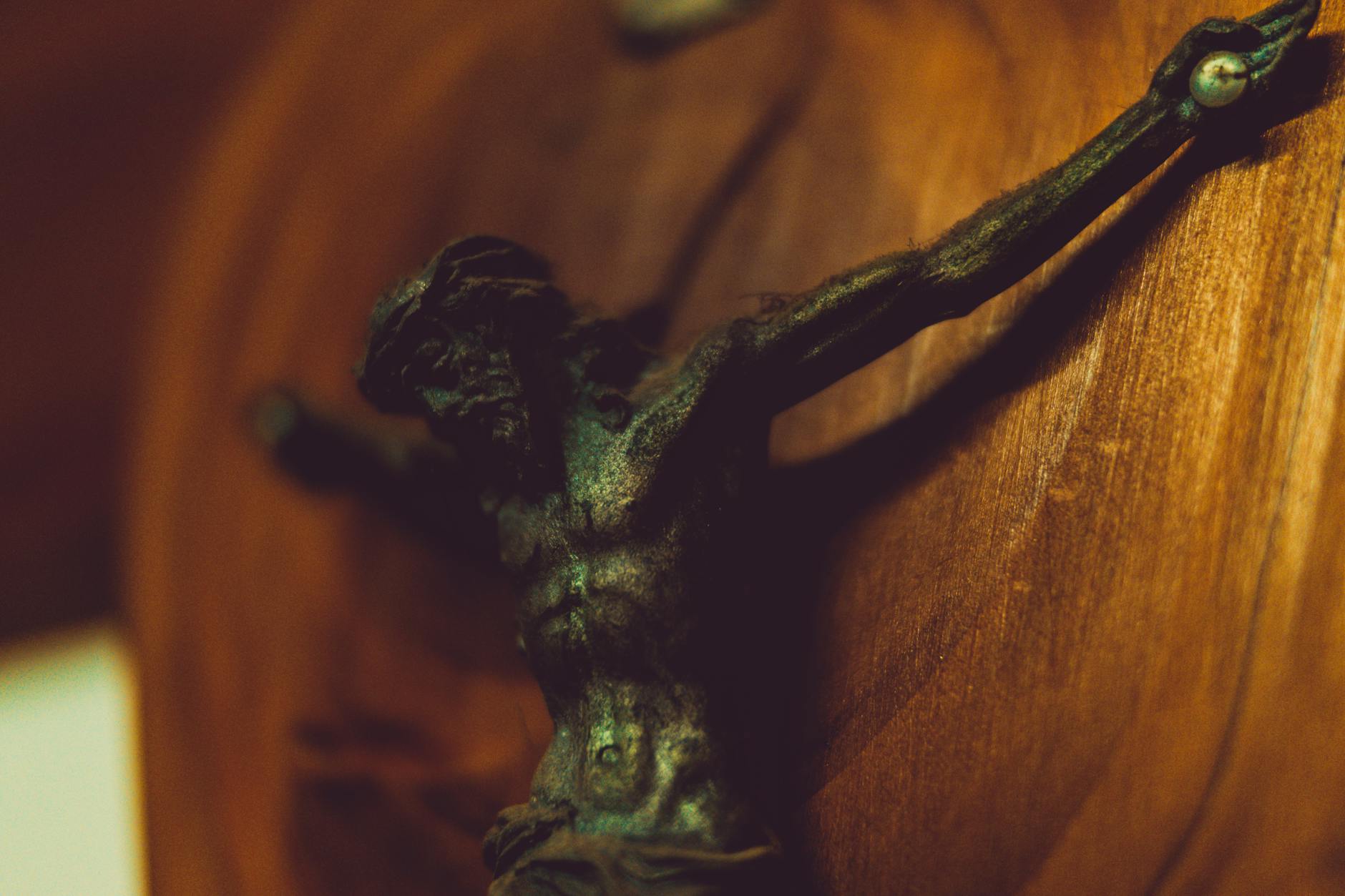
Centuries later, the story repeated—not in a dusty village square, but on a hill called Calvary.
Humanity stood condemned. We had broken the sacred trust, torn the covering of holiness meant to protect and connect us to God. Like Adebayo, we were guilty—caught red-handed in rebellion, selfishness, and shame.
But instead of watching us bear the weight of eternal consequence, Jesus Christ, the Son of God, stepped forward. At the cross, He did the unthinkable: He claimed our guilt as His own.
“There is therefore now no condemnation for those who are in Christ Jesus.”
Romans 8:1 isn’t just a verse—it’s the heartbeat of grace.
It means that, like Adebayo’s story, Christ bore the shame so we could be free. He didn’t excuse the wrongdoing—He absorbed it. The penalty was real, but His love was greater. Through Him, the judgment was satisfied, and the guilty declared righteous.
In a world that often casts stones and clings to judgment, the gospel crosses all borders—cultural, spiritual, and emotional—to speak a new word: forgiven.
No Condemnation: Grace Beyond Borders and Shame

When I came to the United States, it was supposed to be temporary. A visit. Nothing more. If you know Jamaica, you’ll understand. I had my life there, I just started Bible college and my own business, and raising my son and my niece. Life was moving forward with purpose. But then, my son got sick, and by the time I realized that the doctors were more focused on stealing the insurance money than admitting they found nothing wrong, my time to legally remain here had expired. If I went back, I may not have been allowed to return—and I couldn’t risk my son’s care.
So I stayed. Devastated. Displaced. Quietly grieving a life that was unraveling.
My marriage was already falling apart. So, staying in the U.S. felt like the only choice left. I used to tell people, when asked when I would have another child, that “I’ll have another when my son turns five.”
When he was just three and sick, I was alone and barely holding things together. The idea of another child wasn’t even a whisper in my prayers.
Then, I got pregnant.
Out of wedlock.
The outward unforgivable sin.
The sin that leads so many young women to abortion, to isolation, to lifelong depression. (Anyway, I digress…)
It was the kind of moment that can easily bring shame, especially in a community that values marriage and purity. And to be honest, I understood why. The church wasn’t trying to condemn me—they were trying to protect the youth, to set a standard they hoped others would follow. They didn’t want my path to be one others would use to justify choices that can come with real challenges. I get it. I truly do.
But still, I felt judged. I felt watched. And it almost drove me away—not just from the church, but from the calling God had placed on my life.
I didn’t run, though. I showed up every Sabbath except one. What people didn’t know is that God had already spoken to me—not once, but twice. The first time, a pastor told me the day after the act that a child would come. The second time, I had a dream a week later. My daughter was no mistake. She was a message. A gift. A confirmation that even in my uncertainty, God was still speaking.
And when my son turned five—just as I’d always said—I held my daughter in my arms and cried. Not because she wasn’t wanted. But because I remembered: God had not forgotten me. Even though I wasn’t married, even though I felt disqualified, He still gave me the desire of my heart.
Still, the shame was heavy.
It wasn’t that anyone said cruel things to my face. But there was a quiet discomfort that sat in the pews beside me. I wasn’t seen the same way. And I understand that too. We sometimes forget that “all have sinned and fall short of the glory of God” (Romans 3:23). We forget the words Jesus spoke:
“Let him who is without sin cast the first stone.” (John 8:7)
But God never forgot. He never turned away.
The truth is, I let shame sit where purpose once lived. I took myself out of ministry, convinced I had messed up beyond repair. But the voice of the Holy Spirit never stopped whispering.
And now I know:
There is no condemnation for those who are in Christ Jesus.
Not for me. Not for you.
Not for the one who broke the rules but clung to the cross.
Not for the one who sat in silence, waiting for permission to return.
God’s grace reaches past borders—borders of geography, sin, shame, and man-made disqualifications. He meets us where we are, not where people think we should be.
This past youth Sabbath, we traveled from Illinois to New York, where I sat and listened to my 20-year-old son bring the word, and my daughter, who will be 15 next month, do the opening prayer. All I can think of is what if…?
Please, like, subscribe, comment, and share

This post is longer than the norm because I think so many need to know that God loves us more than people think. His grace is sufficient. He did not come for perfect people; there is room at the cross for you.
Please like, subscribe, comment, and share if you were blessed.


Leave a Reply