Please listen here: https://on.soundcloud.com/fNOR7NPpsccOCJ5o4R
Greetings, Grace Across Borders family!
When I first started this blog, it was simply a class assignment. We were encouraged to think outside the box and write about topics we loved and could continue to develop. It was never intended to become a long-term project.
Yet every time I sat down to write, I found myself returning to three things: Scripture, folklore, and life itself.
I have always loved stories. During my time teaching, I discovered that stories often teach lessons in ways that facts alone cannot. They capture our attention, stir our imagination, and remain with us long after the lesson is over.
The stories of the Bible taught me about faith, failure, forgiveness, and God’s faithfulness. Folklore taught many of those same lessons through wisdom passed down from generation to generation. Then there are the stories we live ourselves—the experiences that shape us, challenge us, and often reveal God’s presence in ways we did not recognize at the time.
Over the months, I realized that Grace Across Borders was never simply about comparing Bible stories and folklore. It was about building bridges between Scripture, the stories passed down through cultures, and the experiences we live every day.
The personal reflections I share are not meant to boast or draw attention to myself. They are shared because someone else’s story may help us recognize God’s hand in our own. Sometimes we look back and realize that God was teaching us something long before we understood the lesson.
Today, I want to reflect on the lessons found in stories and the wisdom God offers through them.
Remember Lot’s Wife
One of the shortest commands Jesus ever gave is also one of the most powerful:
“Remember Lot’s wife.” (Luke 17:32)
The story is found in Genesis 19. God was preparing to destroy Sodom and Gomorrah because of their wickedness. Angels were sent to rescue Lot and his family and lead them to safety.
The instructions were simple: flee and do not look back.
Lot, his wife, and their daughters were given a chance to escape. They were warned about the coming judgment and shown the way to safety. Yet as they fled, Lot’s wife looked back. Scripture tells us that she became a pillar of salt.
We are not told much about her thoughts or motivations. What we do know is that her story was preserved.
Centuries later, Jesus would speak only three words:
“Remember Lot’s wife.”
Why?
Because some stories are meant to be remembered as lessons.
The Apostle Paul echoes this truth in 1 Corinthians 10:11:
“Now all these things happened unto them for examples: and they are written for our admonition, upon whom the ends of the world are come.”
The stories of Scripture were not preserved merely to tell us what happened. They were preserved to teach us, warn us, encourage us, and help us make wiser choices.
The Wise Old Woman
Long ago, according to a Japanese folktale, a ruler became convinced that elderly people no longer served a purpose. Believing they were a burden on society, he ordered that all older people be abandoned in the mountains.
Most people obeyed.
One young farmer, however, could not bring himself to leave his aging mother behind. Instead, he secretly hid her beneath his home and cared for her in secret.
Not long afterward, the ruler began issuing impossible challenges to the villagers. One day he demanded a rope made from ashes. Another day he presented difficult riddles and problems that seemed impossible to solve.
The villagers feared punishment if they failed.
Each time, the young farmer returned home discouraged. Each time, his mother listened carefully and offered a solution.
She explained how a rope could be braided before being burned so that its ashes would hold their shape. She solved riddles through the wisdom she had gained over a lifetime of experience. Again and again, her knowledge saved the village.
Eventually, the ruler discovered the secret.
Rather than punish the farmer, he realized his mistake. The wisdom of those who had gone before was not a burden but a treasure. The elderly were welcomed back, and the ruler learned that experience carries lessons that cannot be replaced.
The village was saved because someone was willing to learn from the wisdom of another.
Are We Missing the Lesson?

We live in a generation that wants answers, evidence, and explanations.
People ask questions such as:
How could Jonah survive inside a great fish?
How could Peter walk on water?
How could Lot’s wife become a pillar of salt?
How could any of these things possibly happen?
To be clear, there is nothing wrong with asking questions. Seeking truth is important. God is not afraid of our questions, nor is He threatened by our desire to understand.
Yet I sometimes wonder if, in our efforts to prove or disprove a story, we miss the lesson it was intended to teach.
When Jesus said, “Remember Lot’s wife,” He did not explain the science behind the pillar of salt. He pointed to the lesson.
When Paul wrote that these things were recorded for our example, he was not inviting endless debate. He was inviting transformation.
The question is not only, “Did this happen?”
The question is also, “What can I learn from it?”
One thing I have often said is this: If I see someone experience something and I have already seen the outcome, why shouldn’t I learn from it? Why do I have to relive it myself?
That question has stayed with me for years.
If I can see the consequences of a decision, the pain caused by a mistake, or the blessings that come from obedience, why would I ignore the lesson and insist on learning it the hard way?
That is exactly what makes the stories of Scripture so valuable. God has already shown us examples. He has shown us people who trusted Him and people who didn’t. He has shown us the results of obedience and the consequences of rebellion. He has preserved their stories so that we can learn from them.
I think about my own life and the mistakes I have made. How many times did I look back when God was calling me forward? How many times did I cling to something He was asking me to release? How many painful lessons could I have avoided if I had paid closer attention to the examples already given?
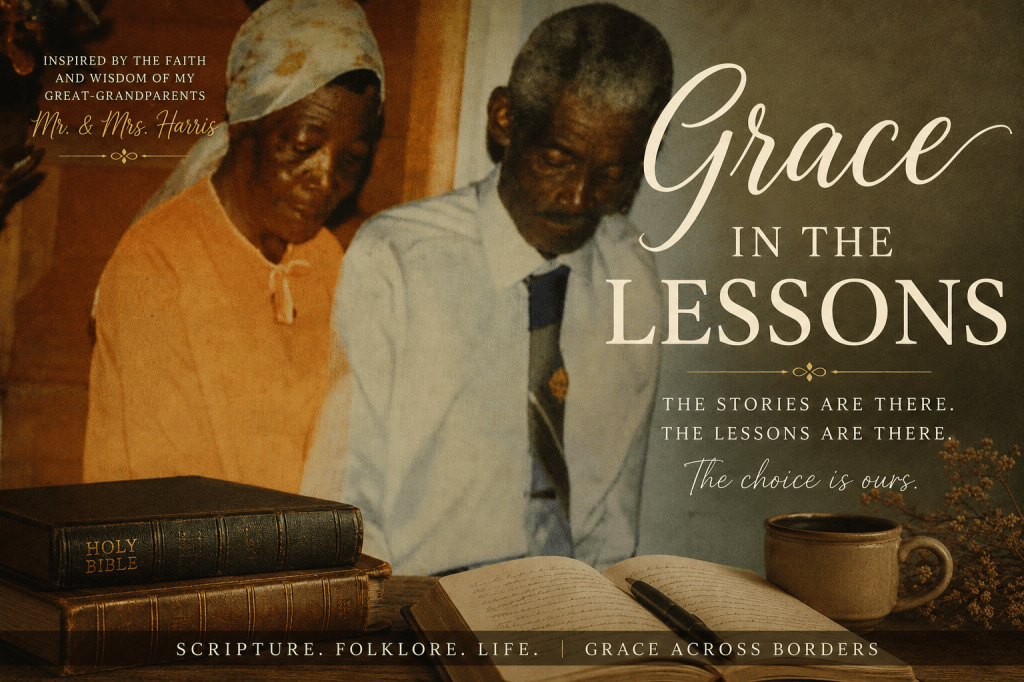
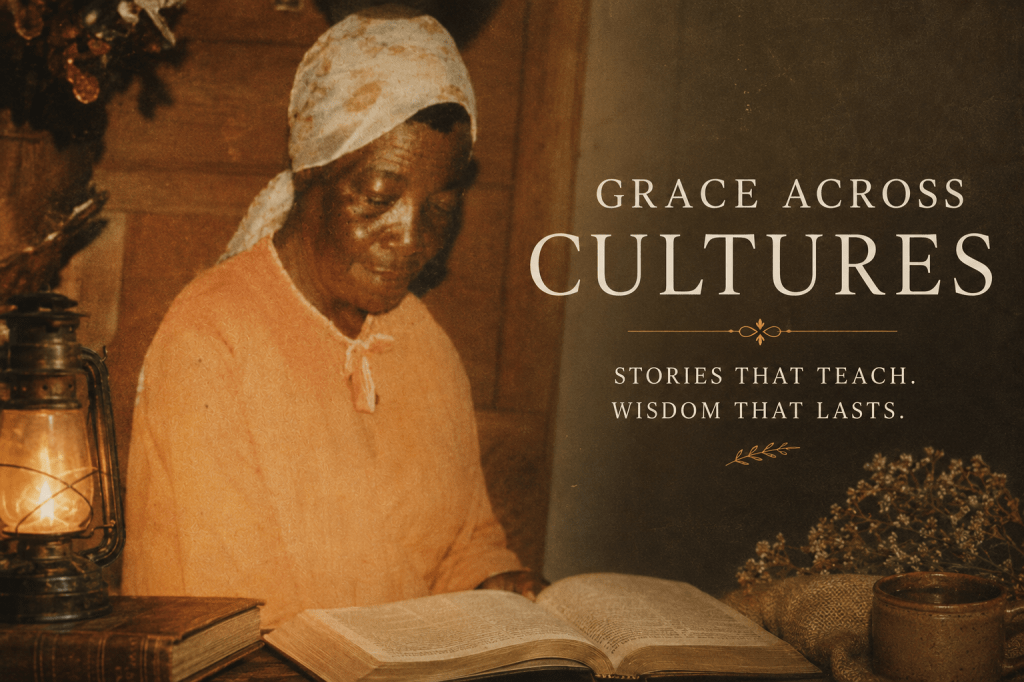
When I think about learning from those who came before us, I often think about my great-grandmother. She had habits of faith that seemed simple at the time. If you handed her a cup of water, a cup of tea, or even a mint, she would pause and pray over it before putting it to her mouth. As a child, I may not have understood the significance of those moments. Today, I see them differently. They were lessons. They were examples. They were small acts of faith that taught trust, gratitude, and dependence on God. Long after she is gone, those lessons remain.
God has given us free will. He allows us to choose our path. Yet in His grace, He does not leave us without direction. He fills Scripture with stories of faith and failure, wisdom and regret, warnings and promises.
These stories are not merely records of other people’s lives. They are guideposts for our own.
Perhaps one of the greatest expressions of God’s grace is that He allows us to learn from the experiences of others. We do not have to make every mistake ourselves. We do not have to discover every lesson through pain.
The stories are there.
The examples are there.
The wisdom is there.
The choice is ours.
Will we simply debate the story, or will we learn from it?
Prayer
Heavenly Father,
We thank You for being with us, for being ever-present, and for being our ultimate guide.
Lord, when humanity chose its own way, You did not abandon us. Because You gave us free will, we have often chosen paths that lead away from You. Yet in Your mercy and grace, You did not leave us there. You sent Your only Son to die on Calvary’s cross so that we might have the opportunity for eternal life.
And even then, You were not finished showing Your love. You left us the Holy Spirit to comfort us, guide us, convict us, and lead us into truth.
Lord, we thank You that in all Your infinite wisdom, You continue to love us even when we do not always love You in return.
We live in a world that often questions Your existence and Your character. Some wonder how a loving God can allow consequences. Yet from childhood, we learn through stories and lessons that actions have consequences. We teach our children to treat others as they wish to be treated. We understand that our choices matter. Yet too often, we expect to live without accountability for how we treat one another, how we care for Your creation, and how we respond to Your guidance.
Forgive us, Lord.
Help us to learn from the lessons that surround us. Help us to learn from Scripture, from the wisdom passed down through generations, and from the experiences of those who have walked before us. May we gain wisdom without always having to learn every lesson the hard way.
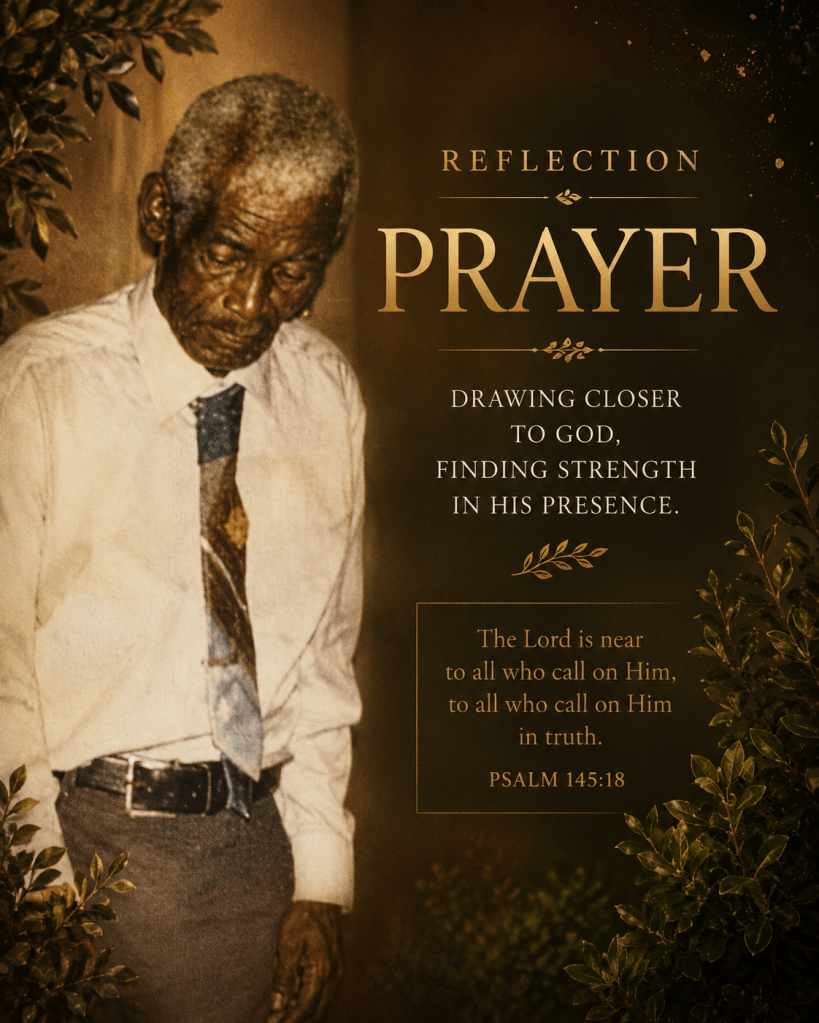
Lord, I think of my great-grandmother, who would pray over everything placed into her hands. Whether it was a cup of water, a cup of tea, or even a simple mint, she would pause and thank You before partaking. Help us to cherish those examples of faith. Help us to remember the wisdom of those who came before us and to pass those lessons on to the generations that follow.
Teach us to seek You in everything we do. Give us ears to hear, hearts to obey, and wisdom to learn from the stories You have placed before us.
In Jesus’ name,
Amen.


Leave a Reply