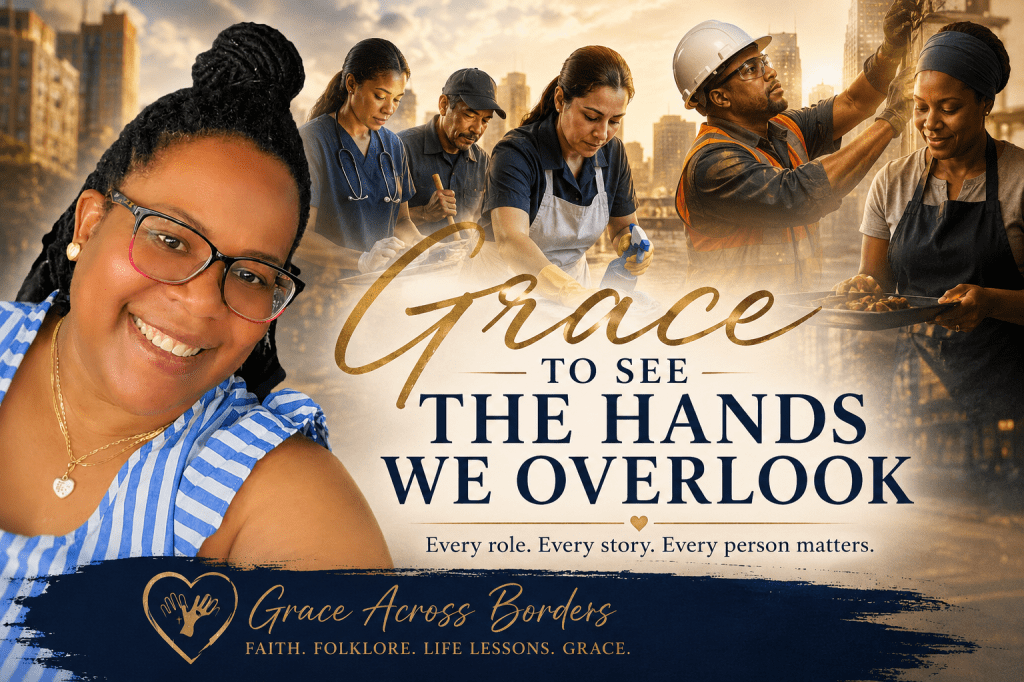
Click here to listen: https://on.soundcloud.com/ayOuF3UnGR0GMjdsBW
Hi I am Tameka and welcome to this week’s Grace Across Borders.
When I came to this country in my early twenties, I did just about every job you could think of.
From selling perfume on the streets of Manhattan for commission, to working as a home health aide, to taking almost any job that provided an honest living. Like many immigrants and many struggling families, survival often leaves little room for pride. You do what you have to do, and you keep moving forward.
Some jobs were harder than others, but one experience in particular stayed with me.
One day, I was covering a cleaning shift for my mother. I went into it thinking it would be simple work. Not because I intentionally looked down on cleaners, but because from the outside, it did not seem nearly as difficult as people made it sound.
Then I actually did the job.
And that day humbled me.
I remember trying my best, only to later hear that the woman had told my mother I did not do a very good job. At first, I felt embarrassed and defensive. In my mind, I was thinking, “But I dusted shoes that were stored inside the oven. I cleaned up hair left everywhere. I was trying.”
But later, I realized something deeper: what I thought was “easy work” actually required skill, endurance, patience, and an attention to detail I had completely underestimated.
What looked simple from the outside became exhausting once I was the one carrying the weight of it. The constant movement. The physical strain. Cleaning up after people who may never even notice your presence.
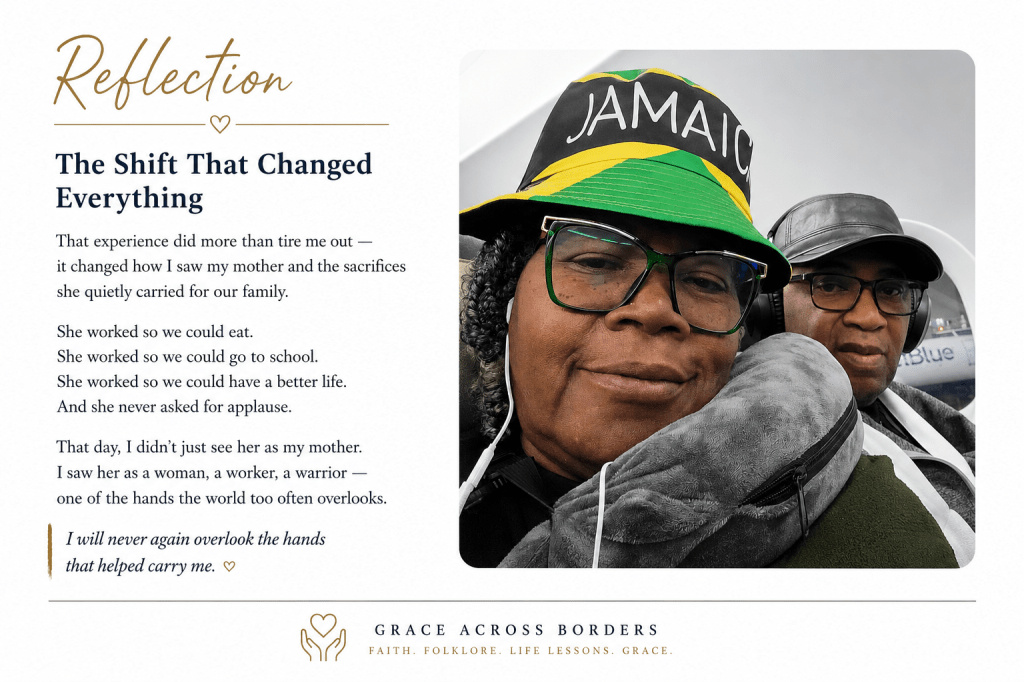
That experience did more than tire me out, it changed how I saw my mother and the sacrifices she quietly carried for our family.
Suddenly, I understood a little more of the exhaustion, labor, and strength it takes to continue showing up every day, even when nobody applauds you for it.
Recently, while talking about some of the jobs I worked after coming to this country, my son, who was only three years old when I first arrived, started listing them one by one.
Some of those jobs I had even forgotten myself. And I just sat there surprised, realizing that all those years, he was paying attention.
The long hours.
The sacrifices.
The constant trying to build a life and put food on the table.
Children may not fully understand our struggles at the time, but they often remember more than we think they do.
And in that moment, I realized something beautiful: just as this experience helped me better understand my mother, maybe my children were quietly learning to understand me too.
That experience taught me something important: we should be careful about judging work we have never had to do ourselves.
Biblical Reflection
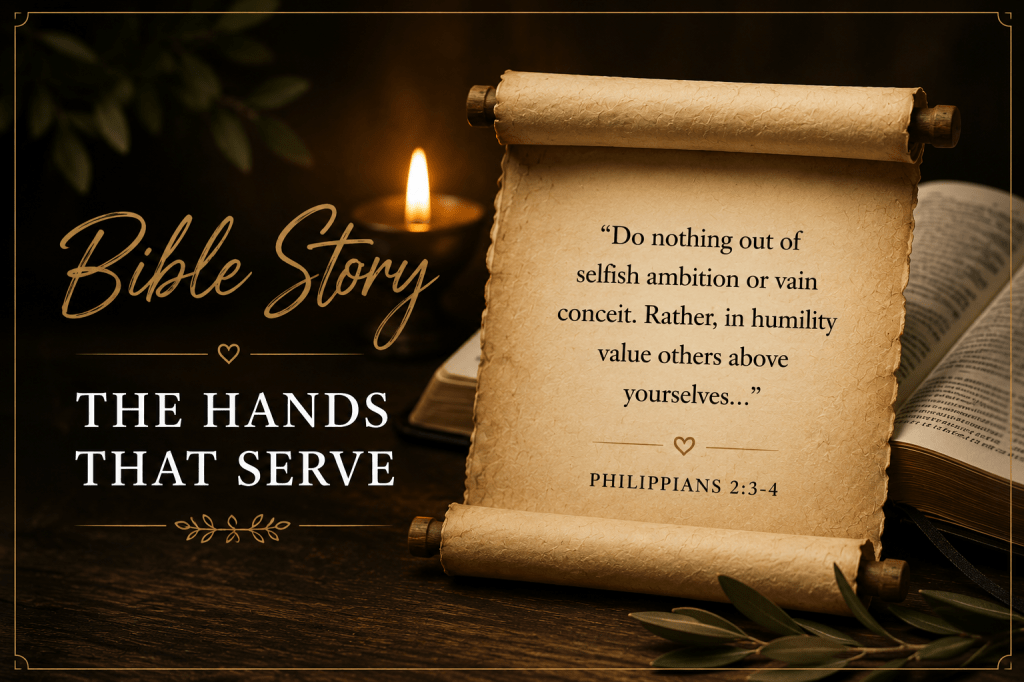
The Scripture for this reflection comes from, a letter written by the Apostle Paul while he was imprisoned. Paul was writing to the church in Philippi, encouraging believers who were struggling with pride, comparison, division, and selfish ambition.
Instead of focusing on status or outward appearance, Paul pointed them toward the mindset of Christ, humility, service, compassion, and valuing others above ourselves.
In Philippians 2:3–4, Paul writes:
“Do nothing out of selfish ambition or vain conceit. Rather, in humility value others above yourselves, not looking to your own interests but each of you to the interests of the others.”
That Scripture feels different when life gives you firsthand experience.
It is easy to overlook people whose work happens quietly in the background. Cleaners, janitors, caregivers, maintenance workers, and others often carry responsibilities many of us underestimate because we only see the surface of what they do.
But humility changes how we see people.
Sometimes God allows us to experience things ourselves so our hearts can soften toward others. Not to shame us, but to teach us empathy, gratitude, and respect.
Even Jesus reminded His disciples that true greatness is found in serving others, not simply being served.
Folklore Reflection
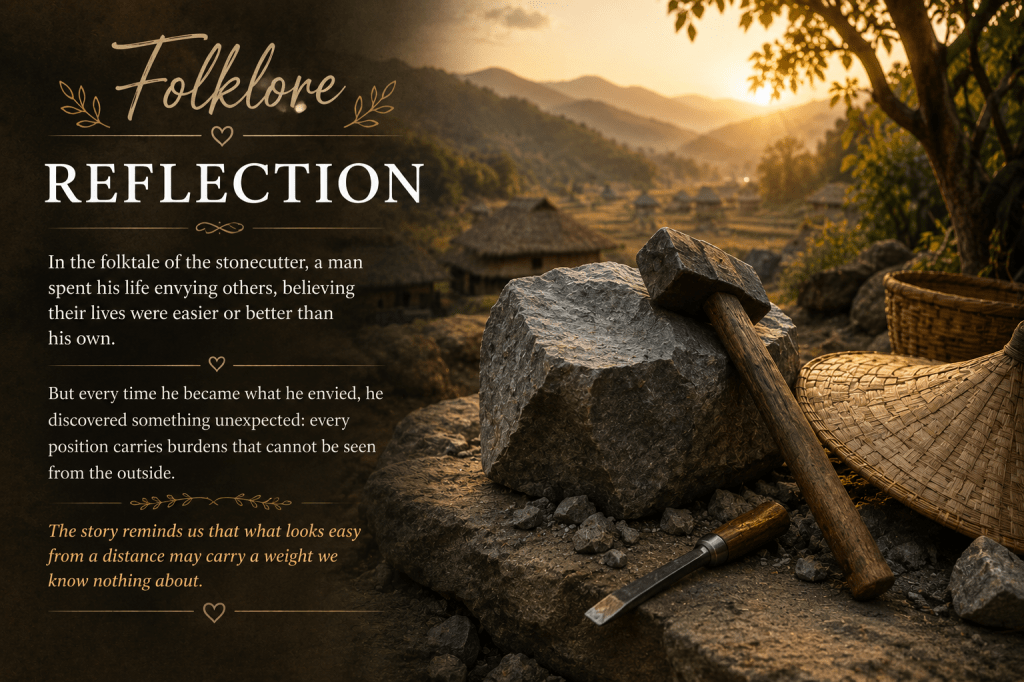
In the folktale, there was once a poor stonecutter who spent his days breaking rocks beneath the hot sun. Though he worked hard, he was unhappy with his life and constantly compared himself to others who seemed richer, stronger, or more important.
One day, he saw a wealthy merchant and wished he could live such a comfortable life. Miraculously, his wish came true. But soon he noticed that even the wealthy bowed before the power of the king, so he wished to become a king instead.
Then he discovered the sun was more powerful than the king, so he became the sun. But clouds blocked the sun. Then the wind moved the clouds. Then mountains stood against the wind. And finally, he realized the stonecutter breaking the mountain still had power too.
After becoming all these things, he eventually understood something important: every position carried its own struggles, limitations, and burdens.
The story reminds us that what looks easy from the outside may carry a weight we know nothing about.
That was my lesson too.
Before that experience, I saw cleaning as “just cleaning.” But once I stepped into those shoes myself, I realized how physically demanding and often thankless the work can be.
Experience changed my perspective.
Personal Reflection
After that experience, I try not to walk past cleaners without acknowledging them.
Sometimes it is a nod.
Sometimes a quiet “thank you.”
Sometimes just a subtle hand across my chest as a sign of appreciation and respect.
Small gestures perhaps, but meaningful ones.
Because people deserve to know they are seen.
Some of the hardest working people in this world move through hallways almost unnoticed, cleaning messes they did not create so others can move comfortably through life.
Some of them are great leaders because they first learned how to serve.
There is something powerful about people who understand hard work, humility, and responsibility without needing recognition for it. Many who clean, care for others, labor quietly, or work behind the scenes develop a strength and discipline the world often overlooks.
Perhaps that is why some of the greatest leaders are not the ones who always stood at the front of the room, but the ones who learned how to serve with dignity long before anyone noticed them.
Maybe the world would look different if we respected service as much as we celebrate status.
I must admit, when I first started writing this reflection, part of it came from my own feelings of being judged.
Sometimes I wonder if people look at me and assume I am not working hard enough because I have chosen to slow down, study, and care for my health while dealing with pain and other challenges they cannot see.
But somewhere while writing this, I realized something ironic: the very thing hurting me was the same thing I was writing about.
How quickly people judge burdens they do not have to carry.
And maybe that is why this lesson matters so much.
Because all of us, in one way or another, are carrying something unseen.
And maybe that is the grace in all of this: learning to honor the hands we once overlooked.
Not because we suddenly pity them, but because experience taught us respect.
Prayer
Lord,
Teach us to see people through eyes of humility and compassion. Forgive us for the times we have judged others without understanding their burdens or overlooked the sacrifices made quietly around us every day.
Help us to honor people not because of titles or status, but because every person carries value and dignity in Your sight.
Give us grateful hearts, gentle spirits, and the wisdom to recognize the hidden labor that often goes unnoticed.
Help us also to remember that many people are fighting battles we cannot see. Teach us to lead with grace instead of assumption, compassion instead of judgment, and understanding instead of pride.
May we never become too proud to appreciate the hands that help carry this world forward.
In Jesus’ name, Amen.


Leave a Reply