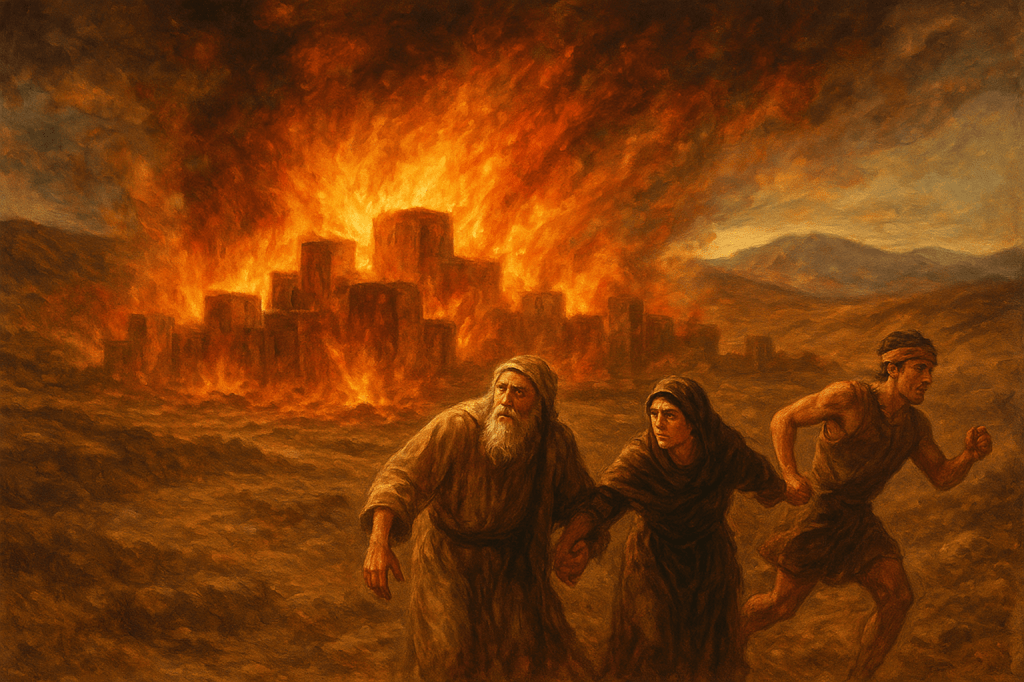
When most people hear about Sodom and Gomorrah, they picture fire raining down and cities reduced to ash. The focus is often on what sins were judged, as if the story were given to fuel arguments. But if we pay attention to the prophets, the teachings of Jesus, and even the folklore that grew around the tale, the lesson is far deeper—and much closer to our own lives.
Abraham’s Prayer, God’s Judgment

The story begins in Genesis 18–19. God tells Abraham that Sodom’s outcry has reached heaven, and judgment is near. Yet Abraham doesn’t celebrate or condemn. Instead, he intercedes. “Will you sweep away the righteous with the wicked?” he pleads, bargaining all the way down to ten righteous people. Abraham’s heart leans toward mercy.
But in Sodom, when the angels arrive, they find cruelty and violence. Lot’s family is pulled out, and destruction follows. Smoke rises like a furnace, a symbol of what happens when a community turns away from God.
What Was Sodom’s Sin, Really?

For centuries, people have debated that question. But Scripture itself gives us the clearest answer.
Genesis shows us a city consumed by violence and hostility toward outsiders. But Ezekiel 16:49–50 reveals the root problem:
“Now this was the sin of your sister Sodom: She and her daughters were arrogant, overfed and unconcerned; they did not help the poor and needy. They were haughty and did detestable things before me.”
Sodom’s downfall wasn’t only about immorality. It was about arrogance that crushed humility, selfishness that erased compassion, and a community that forgot its duty to the vulnerable. Their tables were full, but their neighbors went hungry.
The prophets echoed this theme. Isaiah called his own people “rulers of Sodom” and “people of Gomorrah” when they filled the temple with sacrifices but neglected justice, mercy, and care for the oppressed (Isaiah 1:10–17). Worship without love, he declared, is empty.
The Folklore of Cruelty

Jewish folklore paints Sodom as a place where kindness itself was outlawed.
One story tells of a poor traveler who came seeking food. The people gave him coins marked with their names but forbid any merchant from selling him bread. When the man starved, they retrieved their coins from his body.
Another tale speaks of a young girl who dared to show mercy. She secretly carried bread to a beggar, hiding it in her water jar. When her neighbors discovered her kindness, they punished her by smearing her with honey and setting her on the city wall, where bees swarmed and killed her.
These stories may not be history in the strictest sense, but they reveal how the memory of Sodom lived on: as a city where love was a crime and cruelty was a civic duty.
The Reflection for Us

And here is where the story turns toward us. Too often, we focus on condemning others while ignoring the heart of God’s warning. We build walls between “us” and “them.” We refuse compassion to those who don’t look like us, don’t sound like us, or don’t live like us. Like Sodom, we can become arrogant, overfed, and unconcerned.
Jesus didn’t call us to weaponize Sodom’s story. He called us to remember the greatest commandment: “Love your neighbor as yourself” (Mark 12:31). Without love, even our most passionate religion is nothing but noise (1 Corinthians 13:1–3).
The fire that consumed Sodom may feel distant, but the coldness that preceded it is always near. When love becomes a stranger, when compassion is cast out, when judgment replaces mercy—that is when communities crumble.
The Ashes That Speak

Maybe Sodom’s ashes are not here to give us ammunition against others. Maybe they are here to remind us of what happens when we stop seeing our neighbor as family. The real warning is not just about what God destroyed, but about what people refused to build: a community of love, justice, and hospitality.
Let us learn the lesson Sodom forgot. Let us welcome love back to the table, before our own hearts turn to stone.
Closing Prayer
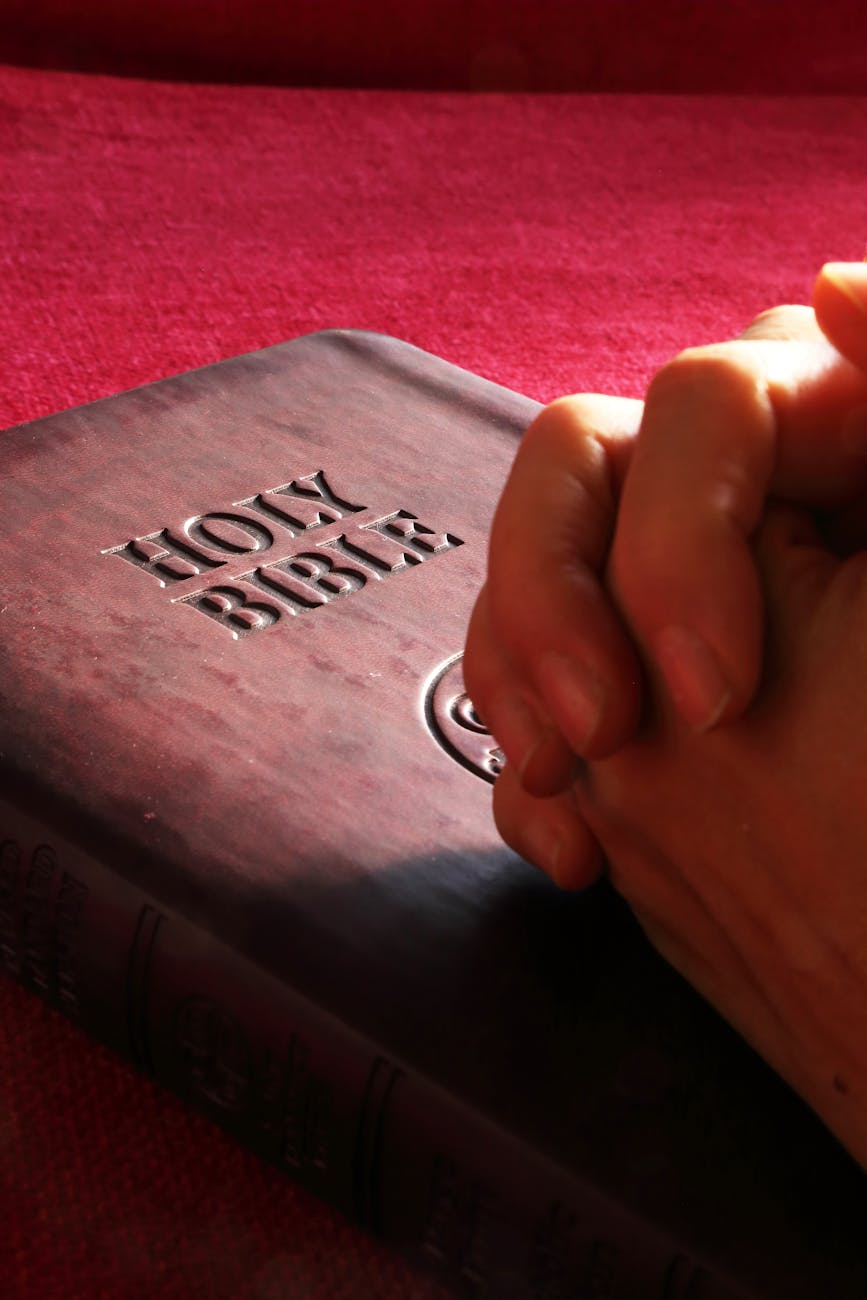
Lord of mercy and compassion, teach us to remember the lesson of Sodom. Guard our hearts from pride, selfishness, and indifference. Open our eyes to the poor, the stranger, and the neighbor who needs love. May your Spirit guide us to walk in humility, justice, and kindness, so that in all we do, your love is never a stranger. In Jesus’ name, Amen.


Leave a Reply