• Grace Across Borders: Faith, Healing, and Unexpected Lessons

    On Sunday, I experienced my own reminder of faith and grace in the most unexpected way. Let’s dive in, and I hope you will be blessed—and if you are, please let me know by liking, commenting, and sharing. Welcome to another post in Grace Across Borders.

    Faith: Healing from Afar

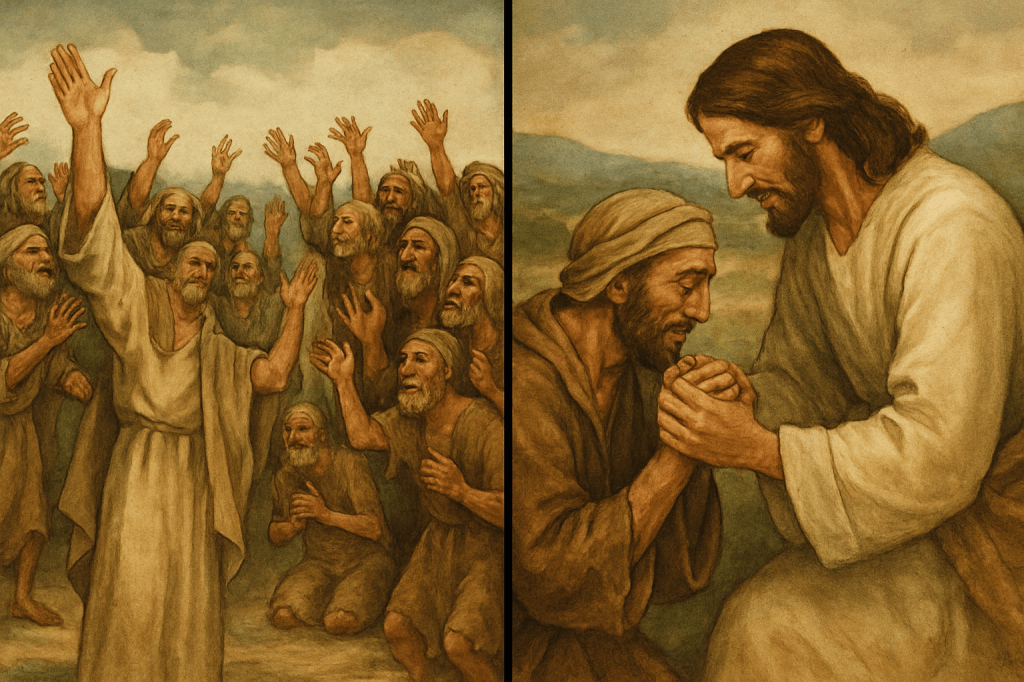
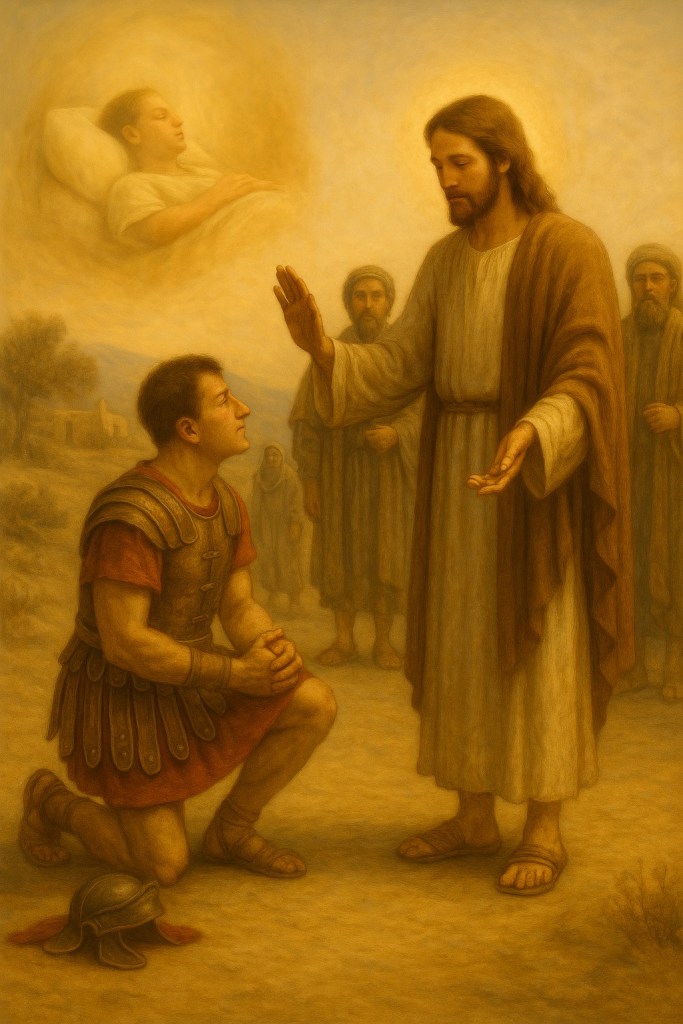
    This week, a powerful story from the Bible has been weighing on my heart—the account of the Roman centurion who came to Jesus, pleading earnestly for his servant’s healing. What struck me most deeply was the centurion’s extraordinary faith when he said, “Lord, I do not deserve to have you come under my roof. But just say the word, and my servant will be healed” (Matthew 8:8).

    Jesus was amazed by this declaration and even said that He had not found such great faith anywhere in Israel. The centurion believed so strongly in the authority of Jesus’ word that he trusted healing would happen simply by Jesus speaking it—without even needing to be physically present. His faith transcended proximity or rituals and rested entirely on the power of Jesus’ command.

    This story offers a profound example of faith that goes beyond what we can see or touch. It challenges me to consider how often I place limits on my own faith, expecting God to act only when I can physically experience His presence or intervention. The centurion’s trust invites me to believe in the power of God’s word itself—the spoken promise—and to remember that God’s work is not bound by distance or circumstance.

    In a world that often demands proof and control, this story reminds me that faith means resting in God’s power even when the evidence is unseen or delayed. It encourages me to cultivate a faith that looks beyond immediate appearances and trusts deeply in the living Word of God.

    Folklore of Unbelievable Faith

    This biblical narrative reminds me of a folk tale I once heard about a distant healer whose voice could travel across mountains and rivers to bring healing to those who believed.

    In the story, villagers would gather, eyes closed and hearts open, fully trusting that the healer’s word—carried on the wind—was enough to mend even the deepest wounds.

    This tale beautifully captures the essence of faith: a belief that goes beyond what we can see, hear, or physically grasp.

    Sometimes, true faith means embracing the unseen power of a word or promise, trusting it to work even across great distances.

    The Messenger in the Ambulance: Chris

    Photo by NHP&Co on Pexels.com

    Sunday, grace found me in the middle of chaos. I was hit with sudden, severe chest pains—sharp, unrelenting, and terrifying. It wasn’t just discomfort; it was the kind of pain that steals your breath and fills your mind with fear.

    In that moment of vulnerability, unsure of what was happening or how bad it might be, I was reminded once again that even in crisis, God is near, often through the hands and hearts of others.

    One of those messengers was Chris—an EMT who responded to my emergency. I noticed a visible twitch and other signs of his own struggle as he carefully hooked me up to the monitors in the back of the ambulance. His movements were deliberate, gentle. He reassured me that I would be okay and offered me aspirin before checking if I was comfortable.

    Then he moved to the driver’s seat. As soon as the ambulance exited my cul-de-sac, sirens blazing, it was clear nothing would stand in its way.

    I’ve been in ambulances before, but never one where the driver moved with such focused compassion.

    The urgency in his driving matched the care he had shown in the back of the ambulance. Chris had every reason to hold back, to let his challenges interfere—but he didn’t. His compassion gave me hope, and his dedication helped me put my own struggles in perspective.

    A Hard Week, a Clear Message

    Photo by Tima Miroshnichenko on Pexels.com

    This week, I wrestled with frustration—slow feedback, sparse communication, and the news that my MDiv program is closing. It made me question whether continuing was even worth it.

    But then came Chris.

    He didn’t say much, but through his care and presence, he reminded me: even in pain and discomfort, we are still whole. God doesn’t wait for us to be “fixed” to use us.

    Like Little James from The Chosen—the disciple portrayed as physically broken yet still sent to heal—I’m learning that healing isn’t a prerequisite for purpose. When I realized that his story wasn’t actually found in Scripture, it reminded me how much I still have to learn. There’s always more depth, even in the stories I think I know.

    Labels like “disabled” or “discouraged” don’t cancel my calling. Wholeness isn’t the absence of pain—it’s the presence of obedience. God’s power is made perfect in weakness.

    There are many reasons I could quit. I’m a disabled veteran. No one would blame me.

    But there’s only one reason I stay the course: God hasn’t released me.

    So I keep moving forward—even if it’s with a limp.

    No excuse. Just obedience.

    Writing from the ER: Unstoppable Grace

    My flowers are blooming, and so is my faith.

    I wrote these words on my cellphone, lying in an ER bed.

    If I can create and share hope from a place of pain, imagine what’s possible when I’m whole. The devil cannot stop us from moving forward with God’s grace. No circumstance, no setback—nothing can separate us from the love and purpose God has placed within us.

    I was released with no real answers, but no pain either.

    I was heading home.

    Another Messenger: Grace in Unexpected Places

    A picture I took of the waiting room at the ER upon my discharge. Never seen one so empty.

    As if God hadn’t already made Himself clear about what I should do, He sent yet another reminder. After I was discharged from the ER, my Uber driver arrived—a man with his own visible disability.

    One of his hands was shorter than the other, and he was missing fingers. Yet, despite this, he opened the door for me to get in.

    Sitting in the back of his Tesla, I was overwhelmed with gratitude. Here was someone who, by the world’s standards, might have every reason to hold back or let discouragement win. Instead, he chose to serve, to show kindness, and to move forward with grace.

    I have no other response than to give God thanks for the events of this day.

    He is truly something else—always finding new ways to show that His grace is sufficient,

    His messengers are everywhere,

    His presence crosses every border of circumstance and expectation.

    “But he said to me, ‘My grace is sufficient for you, for my power is made perfect in weakness.’ Therefore I will boast all the more gladly about my weaknesses, so that Christ’s power may rest on me.”
    2 Corinthians 12:9 (NIV)

    Prayer:

    Photo by Arina Krasnikova on Pexels.com

    Father, thank You for Your grace that carries us through every trial. Help us to trust that You are working, even when we feel broken or discouraged.

    Let us see Your hand in every act of kindness, every word of encouragement, and every step forward.

    May we never forget that, with Your grace, we are truly unstoppable.

    In Jesus’ name, Amen.

    Let this be a reminder: God’s grace moves across every border—of pain, doubt, or fear. If you’re reading this, know that you, too, are unstoppable when you move with God’s grace

    Written in a moment of pain, but overflowing with hope. Imagine what’s possible when we move with faith and grace, no matter where we find ourselves.

  • When Frustration Boils Over: Lessons from Moses and a Father, Son, and a Donkey

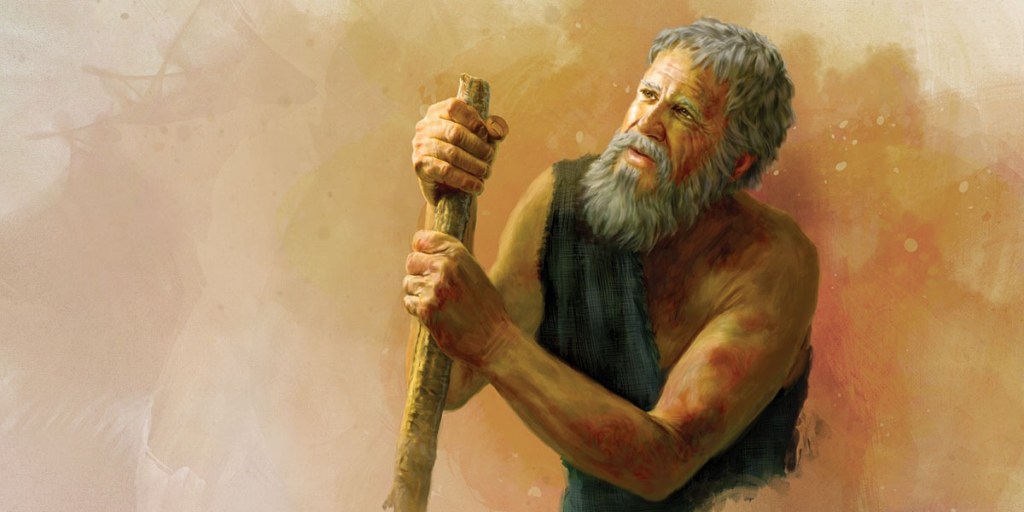
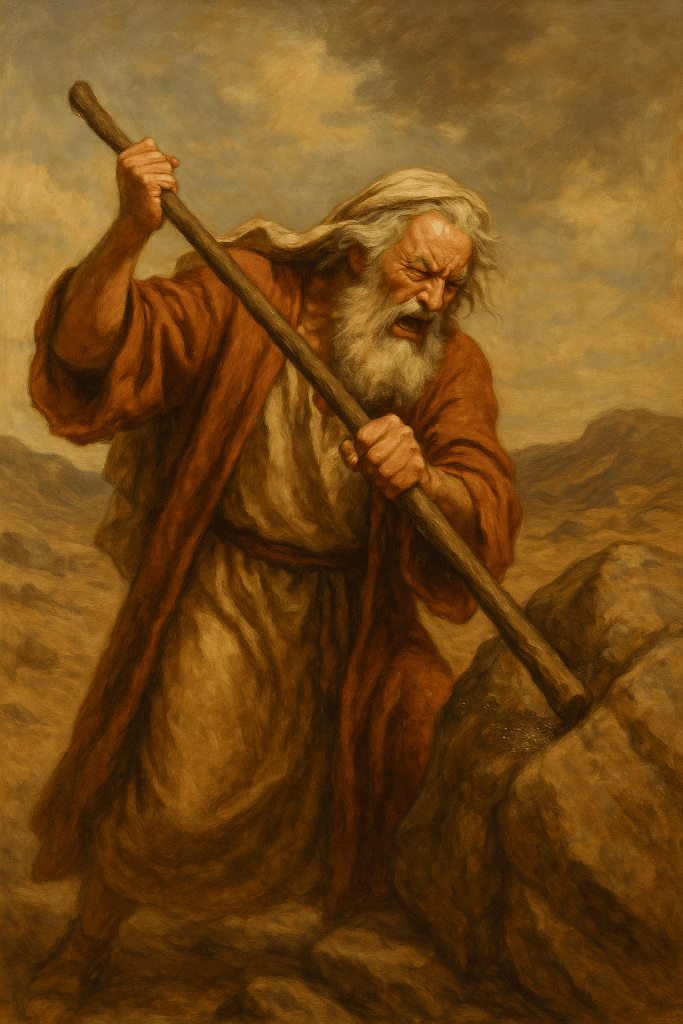
    Moses and the Rock – A Leader’s Breaking Point

    Hi, I’m Tameka—welcome back to Grace Across Border, where every story reminds us that even in our mess, grace still shows up. Today’s story is one of frustration, failure, and unexpected provision. Let’s dive in.

    AI generated

    Moses had been walking a long road—both literally and spiritually. From the moment he answered God’s call to lead Israel out of Egypt, he faced resistance at every turn. First from Pharaoh, then from his own people. Even after miracles, manna, and mercy, the Israelites grumbled. They longed for Egypt’s onions and garlic instead of heaven’s bread. They questioned his leadership and accused him of bringing them out to die.

    By the time we reach Numbers 20, the people are at it again—this time thirsty, tired, and loud about it.

    They quarreled with Moses and said,

    “If only we had died when our brothers fell dead before the Lord! Why did you bring the Lord’s community into this wilderness, that we and our livestock should die here? Why did you bring us up out of Egypt to this terrible place? It has no grain or figs, grapevines or pomegranates. And there is no water to drink!”
    Numbers 20:3-5 (NIV)

    God, patient as always, tells Moses:

    “Take the staff, and you and your brother Aaron gather the assembly together. Speak to that rock before their eyes and it will pour out its water. You will bring water out of the rock for the community so they and their livestock can drink.”
    Numbers 20:8 (NIV)

    But Moses is fed up. His patience snaps. He gathers the people and yells:

    “Listen, you rebels, must we bring you water out of this rock?”
    Then Moses raised his arm and struck the rock twice with his staff. Water gushed out, and the community and their livestock drank.
    Numbers 20:10-11 (NIV)

    But God is not pleased. He says to Moses and Aaron:

    “Because you did not trust in me enough to honor me as holy in the sight of the Israelites, you will not bring this community into the land I give them.”
    Numbers 20:12 (NIV)

    It’s a sobering moment. Moses let frustration rule his actions. He misrepresented God’s gentleness and made the miracle about himself. He was tired, angry, and deeply human. And yet—this one act cost him his long-awaited entrance into the Promised Land.

    This story is a powerful reminder of what happens when we let frustration take the reins. It’s easy to judge Moses—until we see ourselves in him. Sometimes, when we’re tired or misunderstood, we react in ways we regret.

    This brings to mind another story—a simple one, but just as profound.

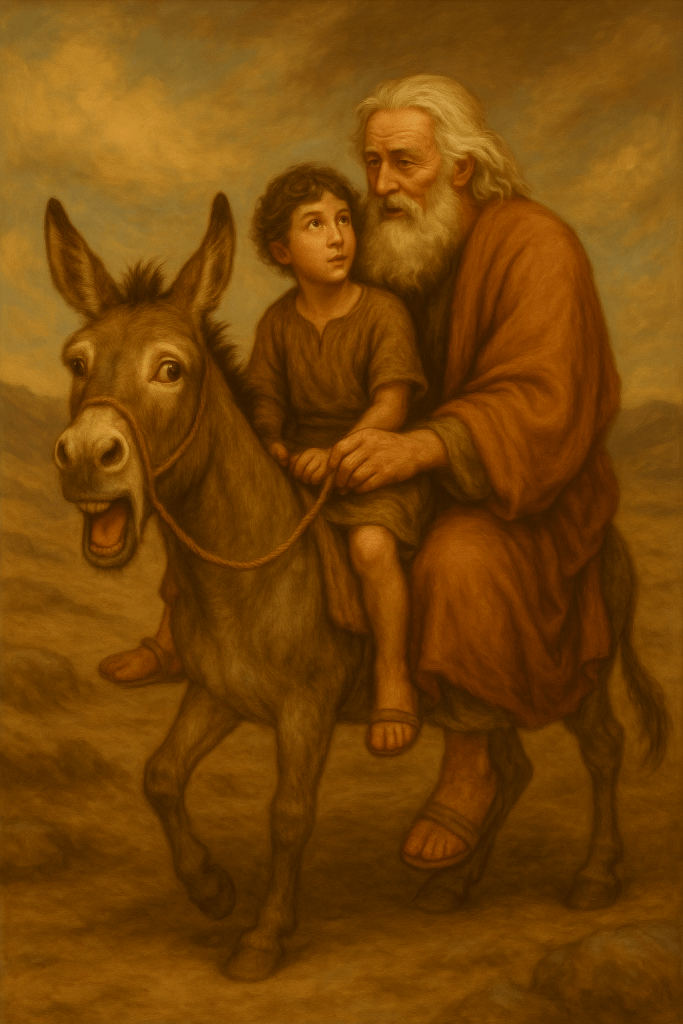
    The Man, the Boy, and the Donkey – The Folklore of Pleasing People

    AI generated

    In an old Aesop fable, a man and his son are taking their donkey to market. At first, they walk beside it. Some people mock them, saying: “Fools! Why walk when you have a donkey?” So the man lifts his son onto the donkey’s back.

    But soon, someone scoffs: “Look at that selfish boy, letting the old man walk!” So they switch.

    Then others whisper: “What a cruel father, riding while the child walks!” So both ride.

    But then another passerby shouts: “That poor donkey! Two people on its back? Shameful!” Desperate to please, they both dismount and carry the donkey.

    As they cross a bridge, the donkey panics, slips, and falls into the river—and drowns.

    The man and his son are left with nothing.

    The moral is simple: Try to please everyone, and you’ll please no one—not even yourself.

    When Pleasing Costs Too Much

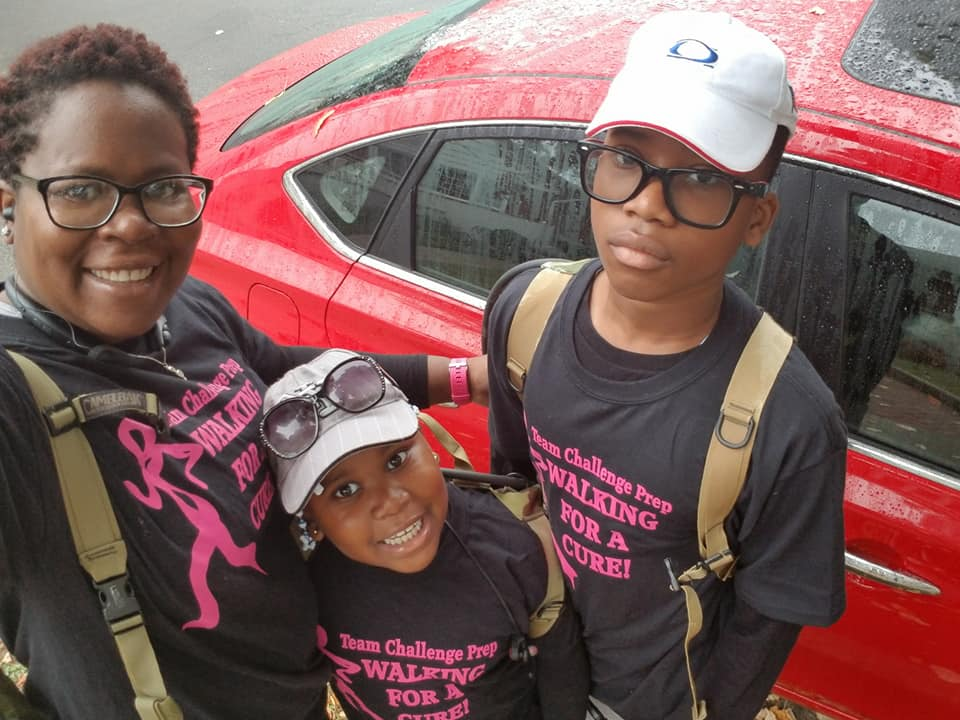
    All three of us posing for a selfie beside the car, in front of the house, before we went for our Girl Scout cancer walk for a cure.

    When I originally started this blog, it was supposed to be a safe place to vent—to reflect on what I’ve been through without judgment or the fear that someone would think I was talking about them. But more and more, reflection has become difficult.

    Like the man, the boy, and the donkey, in trying to please everyone, I’ve become stuck—stuck in a cycle of overthinking, stuck in the fear of being misunderstood.

    And like Moses in Numbers 20, my frustration sometimes spills over. Last week I wrote something I had to go back and fix—not because it wasn’t honest, but because it wasn’t the message God originally gave me. I let my emotion grab the mic before I remembered who actually gave me the words in the first place.

    This week is no different.

    I remember a time when I was so frustrated with everything happening in my life that I became partially homeless—separated from my children at night just to avoid dealing with the situation any longer.

    I was married at the time. My now-deceased ex-husband and his mother turned on me. She owned a two-family home. I had begged him not to move in there because I knew—I knew—that moving in with in-laws rarely ends well. But he took most of our money and put it into carpeting the upstairs apartment, and just like that, I was stuck.

    When things began to fall apart, I had nowhere else to go. I was trying to hold a family together with my bare hands while losing pieces of myself daily. My children needed a stable environment.

    I was ashamed. I felt like a failure as a mother, a wife, a believer. I didn’t see it at the time, but now I understand: I was reacting from a place of pain. Like Moses, I struck the rock—not because I didn’t believe in God’s promise, but because I was tired of the noise, tired of being questioned, tired of the pressure to be okay when I wasn’t.

    They took us to court to evict us. Even though the judge kept giving me time to stay, I started to notice my ex’s attitude shift. He became uncomfortable to be around, condescending, even abusive in tone, made loud noises, and even tried to shut off the utilities, because the judge evicted him. Though I still had time, I made the decision to leave before I was legally forced to. I did it for my peace.

    I left out of frustration.

    I left before I had a place to go as a family.

    I had to send my children to stay with my mom while I crashed on my brother’s couch, and put my stuff in storage. It was the only way we could all keep going to school. That separation? It broke me. I felt like I was failing as a mother, as a wife, and as a person.

    And to make matters worse, I had just lost my job.

    My car was at its end.

    Everything that once felt secure was unraveling all at once.

    But even then—even in all that chaos—God provided.

    We lacked nothing that we needed.

    He used everyone he could find to bless us and reminded us of His promises.

    I started praying specific prayers for the things I needed the new house to have.

    Guess what, he exceeded my expectations.

    The most amazing part was, God did all that without me having a job.

    He provided, not me.

    My children still talk about that home and the red car God provided after all the mess of what we lost vanished. It was my first brand new car, only 8 miles had been driven on it before me.

    Photo taken by T. Edwards Gooden or DJ & Dom beside the red car.

    But here’s what I’m still learning:

    God is still gracious, even when we respond from frustration.
    He still allowed water to flow from the rock.
    He still preserved my children.
    He still made a way—even when I couldn’t see one.

    Like in the fable, I finally learned that trying to please everyone can make you lose everything—including yourself.

    This week, I’m reminded to lay down the expectations that don’t belong to me.
    To speak to the rock instead of striking it.
    To walk in obedience, not performance.

    Because grace across borders means grace even when I cross the border into brokenness.

    If you’re in a wilderness season—angry, tired, or feeling like you’ve missed your chance—know this:

    God still provides.
    Grace still finds you.
    And water still flows, even when you’re at the end of yourself.

    “The Lord is close to the brokenhearted and saves those who are crushed in spirit.”
    Psalm 34:18 (NIV)

    Photo by Arina Krasnikova on Pexels.com

    Thank you for reading all the way to this point. I pray it has blessed you. Keep scrolling—I post every Wednesday, so you may have missed one or two. Catch up; it’s worth it.

  • A Handful of Flour and a Heart of Faith

    The Widow of Zarephath and Elijah

    Hi, I’m Tameka—welcome to Grace Across Borders, where timeless Bible stories meet classic folklore and personal reflections. Together, we’ll explore how God’s grace moves across cultures, histories, and everyday lives.

    Photo by Malidate Van on Pexels.com

    During a time of drought and desperation, the prophet Elijah was sent by God not to a wealthy home in Israel, but to a starving widow in Zarephath, outside the borders of God’s chosen people.

    She is gathering sticks for what she believes is her last meal with her son.

    Yet, God chooses her as the vessel of provision. When Elijah asks for bread, she responds honestly:

    “I have only a handful of flour in a jar and a little olive oil in a jug.” Still, at Elijah’s word, she bakes him a small cake first, and the miracle unfolds—the flour and oil never run out.

    Oh, what a blessing!

    This story breaks boundaries: a Gentile woman becomes a prophet’s provider.

    A moment of scarcity becomes a wellspring of abundance.

    And in the midst of political, ethnic, and economic hardship, God reveals Himself as the sustainer across every border.

    What is God asking you to trust Him with, even when it looks like you have only a handful left?

    And isn’t that just like God?

    Taking what looks like barely enough and turning it into more than we imagined, especially when we’re willing to share it in faith.

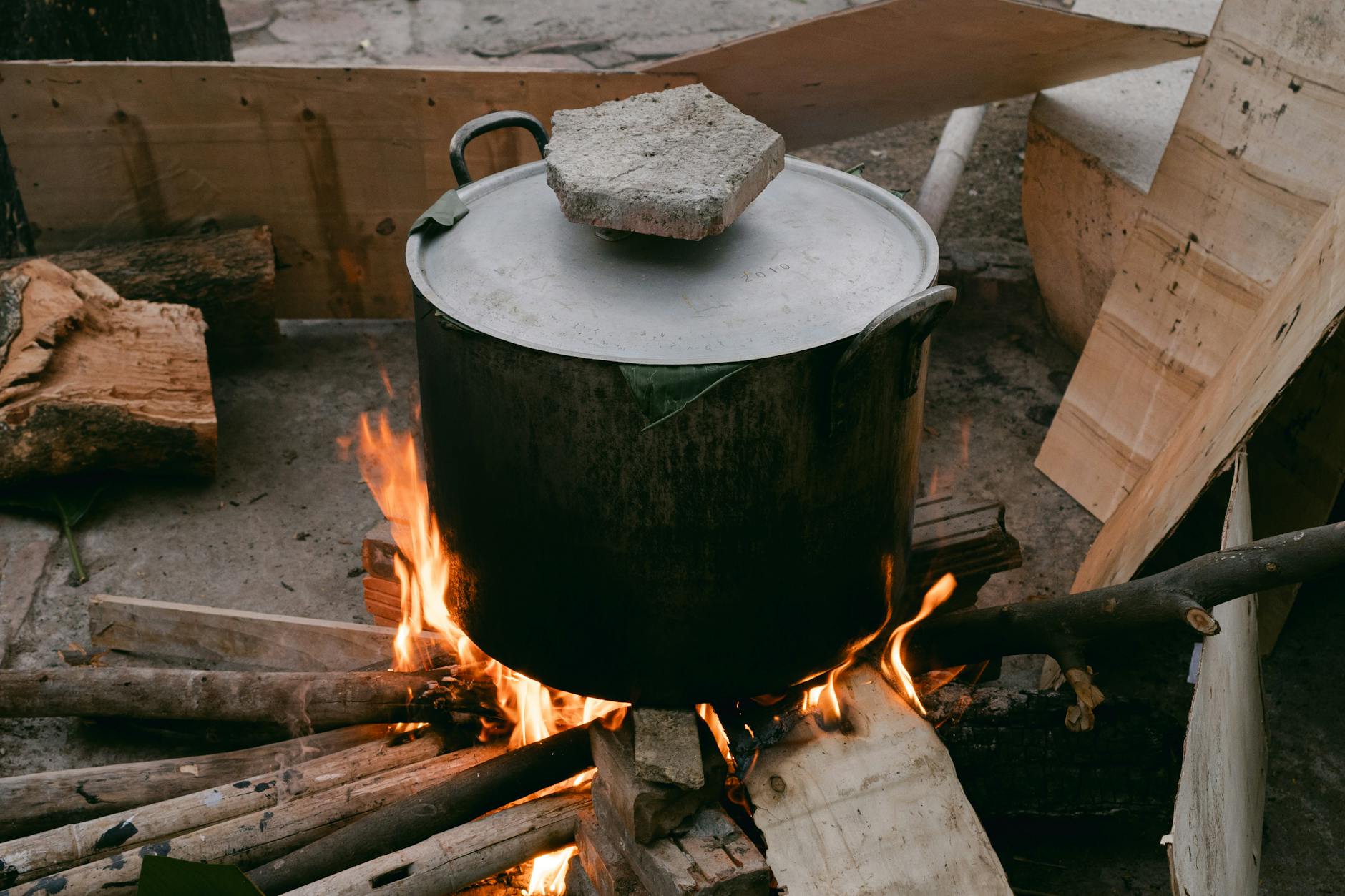
    Stone Soup

    Photo by Lylah To on Pexels.com

    This reminds me of the well-known folktale Stone Soup, where a group of hungry travelers arrive in a village carrying nothing but an empty pot and a simple stone.

    Much like the widow in Elijah’s story, the villagers believe they have nothing left to offer.

    Yet, through curiosity and community, something remarkable happens.

    When the travelers announce they will make soup from a stone, the villagers gather around, intrigued.

    One person adds a carrot, another offers a potato, someone else contributes a bit of meat.

    Slowly, the pot begins to fill, transforming scarcity into a nourishing, abundant meal.

    Just as the widow’s handful of flour became a source of endless provision, the villagers discover that by coming together and sharing what little they have, faith and generosity can turn even the smallest offerings into something sustaining and life-giving.

    Faith in the Middle of Nothing

    Taken on vacation by me. A view of the river through the trees.

    Last night, after spending nearly 12 hours in the library—heavily medicated and just doing my best to catch up—I found myself reflecting on my dear friend, Sis. Andrea.

    It’s been over 16 years, but her act of kindness still echoes in my spirit.

    I had just come to America and didn’t have much. I was trying to stay afloat, navigating a new country, a new life, and a health scare with my son.

    That Sabbath at church, I was tired and worried, preparing for a round of doctor’s appointments to figure out why there was a swelling on his neck.

    As the service ended, Sis. Andrea came up to me. She didn’t ask how I was—she didn’t need to. She gave me a warm hug, whispered, “It will be well,” and gently slipped something into my hand.

    I smiled, thanked her, and tucked it into my bag, assuming it was a small blessing—maybe $20. I didn’t look right away. After all, church was done, and life was still waiting for me.

    On the drive home, I remembered the moment.

    I opened my bag and looked.

    It wasn’t $20—it was $200.

    I screamed.

    My parents, startled, did the classic Scooby-Doo turn and asked what happened. When I told them, my mom just shook her head and said calmly, “Sis. Downes is something else, God bless her.”

    At the time, I had only seen her once before. She was a teacher with two boys of her own. She didn’t owe me anything—she barely knew me. But she gave.

    The following week I asked her, “Why did you choose to bless me like that?” And she smiled and said simply,
    “We have to look out for each other, baby Sis.”

    That day marked me.

    Not because of the money, but because of the love.

    The care.

    The way she saw me when I felt invisible.

    Her generosity reminded me of the widow of Zarephath. Of the villagers in Stone Soup.

    She became a vessel of God’s provision just by opening her hand.

    (This is the part where I would post Sis Andrea’s picture. I know she is a very private person, but if you know her, remind her that she makes a difference every day).


    Reading these three stories side by side reminds me how often I convince myself I have too little to offer:

    Not enough time,
    Not enough money,
    Not enough strength.

    But God never asks us to give what we don’t have.

    He invites us to trust Him with what we do.
    Whether it’s a spoonful of flour, a stone in a pot, or a quiet $200 slipped into a stranger’s hand, grace multiplies when we release it.

    These stories stretch my view of who God chooses.
    The widow was an outsider.
    The villagers were ordinary.
    Sis. Andrea was a stranger.

    The miracle didn’t depend on wealth, title, or religious status,

    but on a heart willing to say, It will be well.”

    So I wonder: Who are the “widows of Zarephath” in our communities today? And how can we honor the unexpected vessels of grace God places in our path?

    In a world so divided, these stories remind me that God still crosses borders—cultural, ethnic, emotional—to sustain and to save.

    All He asks is that we open our hands,
    Even if all we hold is a handful of flour.

    I cherish stories like these because even when I feel like I have nothing left—
    God sees me.
    And He sees you.
    Trust Him.

    I am forever thankful for everyone who has poured into me over the years. Your kindness, prayers, and generosity have shaped my journey in ways I could never fully express. Thank you from the bottom of my heart!

    Spread the word, see you next week

    Photo by Charlotte May on Pexels.com

    If this story resonates with you. Please like, share, subscribe, and comment.

    Help me get the word out about this bit of positivity.

  • Grow Where You Are Planted

    The Bamboo and the Oak: A Story of Strength in Stillness

    Photo by Pixabay on Pexels.com

    In an old Asian folk tale, a mighty oak tree and a slender bamboo grew side by side. The oak towered high, with thick branches and a wide trunk. It didn’t move when the wind blew. It didn’t bend when the rains came. It was proud of its strength and stood like a statue, immovable.

    Beside it stood the bamboo—thin, flexible, and quiet. It bent with every breeze. It swayed with every storm. The oak mocked it.

    “You’re too soft,” the oak sneered. “Too weak. You move with everything. I stand tall. I resist. That’s real strength.”

    The bamboo said nothing.

    Then the storm came.

    It howled and roared with a fury the grove had never seen. Winds ripped through branches. Lightning lit up the sky. Trees groaned under the pressure.

    The oak stood tall—resisting. Refusing to move.

    The bamboo? It bent. It swayed. It bowed so low it nearly touched the ground. But it never uprooted.

    When morning came, the oak had fallen—split by the storm’s force, its great branches shattered.

    The bamboo, however, rose with the sun. Bent, but unbroken. Quiet. Still standing.

    Daniel: Growing in Exile

    Photo by Dziana Hasanbekava on Pexels.com

    Now consider Daniel.

    Taken from his homeland. Given a new name. Surrounded by power, culture, and pressure to conform. He was offered the best of Babylon: luxury, opportunity, and food from the king’s own table.

    But Daniel—like the bamboo—did not resist with defiance. He didn’t raise his voice or demand his way.

    He simply chose not to eat.

    Daniel 1:12-13 (NIV)
    “Please test your servants for ten days: Give us nothing but vegetables to eat and water to drink. Then compare our appearance with that of the young men who eat the royal food, and treat your servants in accordance with what you see.”

    He quietly resolved not to defile himself with the king’s food (Daniel 1:8). No grand speech. No protest signs. Just faith. Just obedience.

    And what happened?

    Ten days later, he and his friends looked healthier and stronger than all the young men who ate the royal food (Daniel 1:15).

    The bamboo didn’t win by being loud; it endured by being faithful.
    Daniel didn’t grow strong by eating what the world offered; he grew strong by staying rooted in God’s word—even when no one else around him did.

    My Reflection: Faithfulness in Small Places

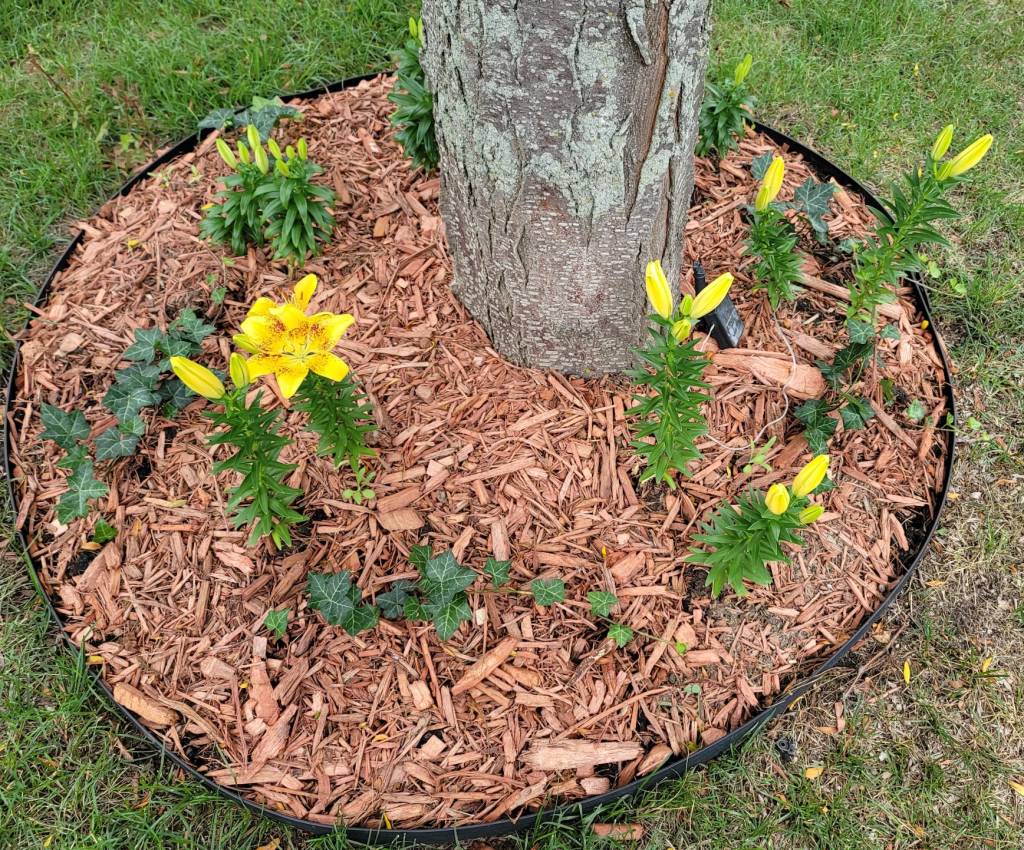
    My creation, the beauty is the many seeds underneath not seen.

    – Inspired by Daniel’s story and my 10pm garden moment

    It was 10 p.m., and I found myself dragging my husband outside to help me plant a garden by the roots of a tree I had been eyeing since I moved in—four years ago. I had made a vow to write my blogs every Wednesday, but tonight, I just couldn’t think of a topic or story I wanted to write about. So, instead, I gardened.

    Probably not the most logical thing to do that late at night.
    But there I was, digging into the earth, planting seeds under a dark sky, chasing clarity with every shovel of soil.

    About an hour later, as I watered the fresh soil and whispered a quiet hope to myself—“I hope they grow and come back yearly”—the topic came to me as clear as day:

    Grow where you are planted.

    Suddenly, the story of Daniel came rushing to mind.

    I thought of how Daniel, taken into exile, chose to honor his convictions even in a foreign land. How he begged the king’s men to let him eat the food he was accustomed to, instead of what they were serving. He told them, “Test me. See if I don’t grow stronger.” He didn’t fight the soil he was placed in—he grew in it.

    And as I stood there with the hose in my hand, I said, “Okay God, that’s the word. But what about my reflection?”

    Then it came to me.

    My Own Babylon: Teaching on Script

    My desk after I finished setting it up

    After I completed my bachelor’s degree in Elementary and Early Childhood Education at Queens College, I was hired at a charter school. I was excited, ready to implement everything I had learned. But truthfully, I had procrastinated on my edTPA, the portfolio needed to work in the public school system. So the charter school felt like a compromise I could live with. I was teaching. The pay was decent. And I didn’t have to deal with that dreaded edTPA—at least not yet.

    But what I didn’t realize was that I couldn’t teach my way.

    I had to follow their script—word for word. I was co-teaching, limited, boxed in. It was frustrating. I had the tools. I had the passion. But I didn’t have the freedom.

    Then something shifted. I was given a small reading group to work with. No one was really watching me. And finally—I got to do me.

    I implemented what I had been trained to do. I tailored my lessons to what my students needed. And my kindergarten students began reading at a second-grade level. By the time I left, they were edging into third-grade proficiency. It gave me great joy.

    When I resigned, I expected to pack my things and be shown the door—just like every other teacher before me. But instead, they asked me to finish out the week. I got to keep teaching my small group. They honored my work.

    I still remember walking around that day, telling teachers goodbye at 10 a.m. They hugged me, wished me well, as my plan was to go to the Navy. But at 4:30 p.m. at dismissal, there I was—still there.

    They looked at me, shocked:
    “Wait… you didn’t leave, you didn’t quit?”

    I came back the next day. And the next. I was the exception to their rule.

    That was God’s favor. (As my friend Asare reminded me today, that favor has always been my portion).

    It didn’t come from being loud or flashy. It came from God. He allowed me to grow right there in the middle of what felt like exile. I wasn’t where I wanted to be. But it was where I was planted. And God caused me to thrive.

    Final Thought: The Soil Isn’t the Point—The Growth Is

    Taking a selfie during orientation

    You might not be where you planned to be. You might feel like you’ve been placed in a difficult setting—Babylon, a storm, or a classroom with limits. But the good news is:
    You can still grow.

    God isn’t asking you to wait for ideal soil. He’s asking you to trust Him with the roots. Whether you’re a Daniel or a bamboo shoot, the principle is the same:
    Let God plant you. Stay faithful. Let the fruit speak.

    And when the storm passes—or when you’re called to move on—there will be evidence that you didn’t just survive.
    You thrived.

    Let the Message Take Root

    Photo by RDNE Stock project on Pexels.com

    Share the post, tap like, comment, and stay tuned for more.

  • No Condemnation: From the Village to the Cross

    Sacrifice in the Village

    Photo by Suraphat Nuea-on on Pexels.com

    “There is therefore now no condemnation for those who are in Christ Jesus.” – Romans 8:1

    In the hills of West Africa, long before colonizers drew borders and cities sprouted, there lived a village known for its justice. The elders would gather under the baobab tree to settle disputes. Their judgments were fair, their punishments swift. But one day, something unexpected disrupted their tradition.

    A young woman named Adebayo stood trembling before the elders. A prized pot had been stolen from the home of a respected elder, and all evidence pointed to her. The village whispered. She had always been quiet, poor, and easily overlooked. A perfect scapegoat.

    The trial was brief. The pot was found buried near her home. The punishment? Exile. Adebayo would be cast out to wander beyond the edge of the village, where wild beasts and worse things waited.

    But just before the sentence was passed, an older woman stepped forward. She was not family. She had no obvious reason to interfere. But with steady eyes, she spoke:

    “If someone must leave so the village can be clean, let it be me. I will go in her place.”

    Gasps rippled through the crowd. No one had ever heard of such a thing. Yet the elders, struck by the woman’s courage—and perhaps their own uncertainty—allowed it.

    The woman walked out of the village alone. Adebayo remained—forever changed by mercy.

    Sacrifice of Christ

    Photo by Francesco Paggiaro on Pexels.com

    Centuries later, the story repeated—not in a dusty village square, but on a hill called Calvary.

    Humanity stood condemned. We had broken the sacred trust, torn the covering of holiness meant to protect and connect us to God. Like Adebayo, we were guilty—caught red-handed in rebellion, selfishness, and shame.

    But instead of watching us bear the weight of eternal consequence, Jesus Christ, the Son of God, stepped forward. At the cross, He did the unthinkable: He claimed our guilt as His own.

    “There is therefore now no condemnation for those who are in Christ Jesus.”
    Romans 8:1 isn’t just a verse—it’s the heartbeat of grace.

    It means that, like Adebayo’s story, Christ bore the shame so we could be free. He didn’t excuse the wrongdoing—He absorbed it. The penalty was real, but His love was greater. Through Him, the judgment was satisfied, and the guilty declared righteous.

    In a world that often casts stones and clings to judgment, the gospel crosses all borders—cultural, spiritual, and emotional—to speak a new word: forgiven.

    No Condemnation: Grace Beyond Borders and Shame

    My son and daughter share a selfie.

    When I came to the United States, it was supposed to be temporary. A visit. Nothing more. If you know Jamaica, you’ll understand. I had my life there, I just started Bible college and my own business, and raising my son and my niece. Life was moving forward with purpose. But then, my son got sick, and by the time I realized that the doctors were more focused on stealing the insurance money than admitting they found nothing wrong, my time to legally remain here had expired. If I went back, I may not have been allowed to return—and I couldn’t risk my son’s care.

    So I stayed. Devastated. Displaced. Quietly grieving a life that was unraveling.

    My marriage was already falling apart. So, staying in the U.S. felt like the only choice left. I used to tell people, when asked when I would have another child, that “I’ll have another when my son turns five.”

    When he was just three and sick, I was alone and barely holding things together. The idea of another child wasn’t even a whisper in my prayers.

    Then, I got pregnant.

    Out of wedlock.

    The outward unforgivable sin.

    The sin that leads so many young women to abortion, to isolation, to lifelong depression. (Anyway, I digress…)

    It was the kind of moment that can easily bring shame, especially in a community that values marriage and purity. And to be honest, I understood why. The church wasn’t trying to condemn me—they were trying to protect the youth, to set a standard they hoped others would follow. They didn’t want my path to be one others would use to justify choices that can come with real challenges. I get it. I truly do.

    But still, I felt judged. I felt watched. And it almost drove me away—not just from the church, but from the calling God had placed on my life.

    I didn’t run, though. I showed up every Sabbath except one. What people didn’t know is that God had already spoken to me—not once, but twice. The first time, a pastor told me the day after the act that a child would come. The second time, I had a dream a week later. My daughter was no mistake. She was a message. A gift. A confirmation that even in my uncertainty, God was still speaking.

    And when my son turned five—just as I’d always said—I held my daughter in my arms and cried. Not because she wasn’t wanted. But because I remembered: God had not forgotten me. Even though I wasn’t married, even though I felt disqualified, He still gave me the desire of my heart.

    Still, the shame was heavy.

    It wasn’t that anyone said cruel things to my face. But there was a quiet discomfort that sat in the pews beside me. I wasn’t seen the same way. And I understand that too. We sometimes forget that “all have sinned and fall short of the glory of God” (Romans 3:23). We forget the words Jesus spoke:
    “Let him who is without sin cast the first stone.” (John 8:7)

    But God never forgot. He never turned away.

    The truth is, I let shame sit where purpose once lived. I took myself out of ministry, convinced I had messed up beyond repair. But the voice of the Holy Spirit never stopped whispering.

    And now I know:
    There is no condemnation for those who are in Christ Jesus.
    Not for me. Not for you.
    Not for the one who broke the rules but clung to the cross.
    Not for the one who sat in silence, waiting for permission to return.

    God’s grace reaches past borders—borders of geography, sin, shame, and man-made disqualifications. He meets us where we are, not where people think we should be.

    This past youth Sabbath, we traveled from Illinois to New York, where I sat and listened to my 20-year-old son bring the word, and my daughter, who will be 15 next month, do the opening prayer. All I can think of is what if…?

    Please, like, subscribe, comment, and share

    Photo by Katerina Holmes on Pexels.com

    This post is longer than the norm because I think so many need to know that God loves us more than people think. His grace is sufficient. He did not come for perfect people; there is room at the cross for you.

    Please like, subscribe, comment, and share if you were blessed.

  • When Running Isn’t the End: Grace for the Ones Who Flee

    Hi, I’m Tameka! Welcome to Grace Across Borders, where timeless wisdom from the Bible meets folk tales from around the world.

    What if grace doesn’t look like fixing, but like finally walking away?

    As someone who’s crossed physical and emotional borders—from Jamaica, to the U.S., and from heartbreak to healing—I’ve learned that grace has many faces. Sometimes, it looks like a second chance. Sometimes, it looks like letting go.

    🐋 Jonah: A Prophet’s Journey of Reluctance and Redemption

    Photo by Brett Jordan on Pexels.com

    The story of Jonah, found in the Old Testament, is a powerful example of how God’s grace can reach even the most unwilling hearts. Jonah was a prophet—someone chosen by God to deliver messages to the people. One day, God commanded him to go to the city of Nineveh, known for its wickedness, and warn them to change their ways or face destruction.

    But Jonah didn’t want to go. He didn’t believe the people of Nineveh deserved mercy, and he feared what might happen if he confronted them. So instead of obeying, he boarded a ship headed in the opposite direction, trying to escape both his calling and God.

    God sent a violent storm to stop the ship. When the sailors discovered Jonah was the cause, they reluctantly threw him overboard to calm the sea. Jonah was then swallowed by a great fish—often described as a whale—where he spent three days and nights. In that darkness, Jonah cried out to God, confessed his fear and disobedience, and asked for another chance.

    God heard Jonah’s prayer and had the fish spit him out onto dry land. Jonah finally went to Nineveh and delivered God’s message. To his surprise, the people listened, repented, and turned away from their evil. In response, God showed them compassion and spared their city.

    Jonah’s journey reminds us that we can’t outrun our purpose. And even when we resist, God still offers grace—not just to us, but through us, for the sake of others.

    Jonah 2:2 (NIV):
    “In my distress I called to the Lord, and he answered me. From deep in the realm of the dead I called for help, and you listened to my cry.”

    🕊️ The Crane Wife: A Tale of Love, Sacrifice, and Trust

    Photo by Shamit Jangra on Pexels.com

    From Japanese folklore comes the poignant story of The Crane Wife. A kind-hearted man finds and rescues an injured crane. Not long after, a mysterious and beautiful woman appears at his door, and they soon marry. To support their life together, she weaves stunning silk fabrics with a simple condition: he must never watch her while she works.

    Their lives improve with the magical cloth, but the man’s curiosity grows. Unable to resist, he spies on her one day—and to his shock, he discovers that his wife is actually the crane he once saved. She is weaving the silk by plucking her own feathers, sacrificing herself for their livelihood.

    Feeling betrayed by his broken promise, she quietly leaves, disappearing forever. This story reminds us how love is often wrapped in sacrifice and trust—and how fragile that trust can be.

    This tale is one of sacrificial love, hidden pain, and the fragile boundary between giving and losing oneself completely.

    💬 Reflection: Embracing Grace After Brokenness

    Photo by RDNE Stock project on Pexels.com

    That tale always reminds me of how easily we can lose ourselves trying to save someone else.

    I’ve been in relationships where I poured out all I had—emotionally, spiritually, even physically—hoping that love, persistence, and prayer would be enough.

    One of my ex-husbands, who passed away recently, was one of those stories. He treated me terribly at times, but I didn’t give up easily. He was physically, emotionally, and financially abusive, just to name a few. Like Jonah pleading with Nineveh, I tried tirelessly to get him to care for himself, to work on his health, and make better choices. I thought if I just loved harder, prayed more, or waited longer, something would change.

    But change never came.

    Eventually, I had to let go—not just of him, but of the version of myself that believed I could fix everything and everyone. Like the crane in the folktale, I gave and gave until I had nothing left. And like Jonah, I had to face the truth: some things are not mine to save, just for me to give the word. I had done all I could—spoken truth, offered love, prayed hard—but the outcome wasn’t mine to control.

    When he died, I felt a complicated grief—part sadness, part relief, and a quiet gratitude that I had already found love and healing before that final goodbye, though it took a couple of tries and rekindling. His passing stirred memories I thought I had buried, and yet, I knew I had made peace. I had loved. I had let go. And I had moved on—not perfectly, but faithfully.

    🌍 Grace That Moves Us Forward

    Photo by Keira Burton on Pexels.com

    These stories—Jonah’s reluctance, the crane’s heartbreak, and even my own—remind me that grace isn’t always about happy endings. Sometimes grace is found in the middle of the storm, or in the silence after someone leaves. Sometimes grace shows up in letting go and giving yourself permission to stop carrying what was never yours to fix.

    You can love someone and still walk away. You can hope and still heal. You can forgive and still choose peace.

    That, too, is grace.

    🤝 One Message, Many Stories: Grace Frees

    Whether through an ancient prophet, a grieving crane, or a woman like me—grace speaks across cultures, wounds, and regrets. It tells us: You are not alone. You don’t have to carry it all. You’re allowed to release it.

    If you’ve ever wrestled with letting go, if you’ve loved someone who couldn’t love you well, if you’ve had to accept that healing looks like walking away—this post is for you.

    Share Your Journey

    Have you ever had to let go of someone you loved deeply? What did grace look like for you? Share with others so they can be blessed by it too.
    And I’d love to hear from you—what’s one story in your life where you had to let go so that grace could do the rest?

  • When a Candle and Two Coins Light the Way: Finding Meaning in Small Acts

    The Little Candle in the Cave: Illuminating God’s Purpose in Our Lives

    Photo by Dhivakaran S on Pexels.com

    Hi, I’m Tameka! Welcome to another post from Grace Across Borders, where timeless wisdom from the Bible meets folk tales from around the world.

    In a world that celebrates boldness, brilliance, and big gestures, it’s easy to feel like what we have to offer isn’t enough. We compare ourselves to those with louder voices, larger platforms, or seemingly greater influence—and wonder if our quiet efforts even matter.

    Let me tell you a story.

    The Power of a Small Light: Why Your Quiet Contribution Matters

    Small candle illuminating cave drawings and writings
    A small candle reveals ancient drawings and writings on the cave wall.
    Image generated with the assistance of Perplexity AI.”

    In the heart of a vast, pitch-black cave, countless torches blazed and lanterns gleamed, their flames dancing proudly against the darkness. Among them stood a tiny candle—humble, quiet, and often overlooked. Its flame was delicate, barely a whisper of light compared to the roaring brilliance of the others.

    The candle often wondered why it was even there. “What use is my small glow,” it thought, “when these mighty flames can light up the whole cavern?”

    Day after day, the candle flickered silently, unsure of its purpose.

    Then, one evening, a lone traveler stepped into the cave. The large torches lit the main paths—bright, direct, and obvious. But the traveler, curious by nature, noticed a subtle glimmer from a narrow side tunnel. It was the little candle, burning quietly in the distance.

    Drawn to its gentle glow, the traveler followed. The farther they walked from the main passage, the dimmer the surroundings became—until the only light was that of the little candle.

    But as they ventured deeper, something astonishing happened.

    The flicker of the small flame began to reveal what the brighter torches had missed: ancient drawings etched into the stone, faded symbols of a forgotten people, inscriptions that had waited centuries to be seen. The candle’s soft glow didn’t blind—it invited. It didn’t dominate—it revealed. Its humble flame brought to light the hidden wonders lying just beneath the surface.

    Awestruck, the traveler turned to the little candle and whispered, “Your light may be small, but it has unveiled treasures the bright lights could not reach.”

    And in that moment, the candle stood taller—not in size, but in purpose.

    This story serves as a quiet but powerful reminder: You don’t have to be the brightest to make a difference. Sometimes, it is the softest light that leads others to the deepest truths.

    Biblical Parallel: The Widow’s Offering

    The Widow's Offering with distinct disciples in the background
    The Widow’s Offering: Jesus and his disciples witness true generosity.
    Image generated with Perplexity AI.

    As crowds gathered at the temple treasury, many wealthy individuals made grand displays of their offerings. The clink of heavy coins filled the air, and eyes turned in admiration. But in the midst of the bustle, an unnoticed woman stepped forward. A widow—already marginalized by society and weighed down by poverty—approached quietly and dropped in two small copper coins, worth only a fraction of a penny.

    To most observers, her act was insignificant, even forgettable. But not to Jesus.

    “Truly I tell you, this poor widow has put more into the treasury than all the others.” Mark 12:43

    In just a few words, Jesus flips the script on how we measure value. Others gave out of their surplus; she gave out of her lack. Her offering wasn’t large in amount—but it was enormous in devotion. It was a gift that came from the depths of faith, trust, and surrender.

    Her story reminds us that God is not impressed by numbers or appearances, but by the heart behind the gift. The widow’s two coins, though materially small, were spiritually priceless.

    We are challenged to consider: What do we offer to God? Do we give Him what’s left over—or do we give Him our all, trusting that He sees and honors even the smallest acts of faith?

    A Wee Bit of Light and Two Small Coins

    No photo description available.
    Sometimes, your light shines brightest when you’re just being present.
    At Aldon and Terri’s wedding (2023), filled with joy, grace, and a reminder of God’s goodness. 💛
    📷: Captured by my lovely sister-in-law, Shereen

    As I reflect on the story of the little candle—how its small flame revealed ancient wonders in a vast, dark cave—I’m reminded of the ways we each carry light. Some shine bright and bold like lanterns, while others glow gently and persistently like candles. But all are needed.

    I think about my own light, and the way I celebrate life. Recently, I turned 43, but I always joke that I’m “just a wee bit 21.” My daughter laughs, and my son (who just turned 20) rolls his eyes—but it always makes people smile. Friends and family text every year asking, “So… are we finally 22 yet?”

    It may seem small, even silly—but it’s sincere. A tiny spark of joy that I’ve found brings light into the lives of others.

    Crowned in joy, wrapped in grace. Birthday Queen 2024 ✨
    A special moment caught by my sweet girl, Dominique.

    And as I reflect further (My Professor, Laura Otto would be proud. Thank you!), I’m reminded of a time during my military service when I faced serious financial hardship, after injury and car accidents. I was sent to financial counseling, and after reviewing my expenses, the specialist said, “You’re giving too much to the church. You need to stop until you’re stable.”

    I remember calmly telling him, “I’m sorry, but my tithes are non-negotiable.”

    He wasn’t pleased. He even questioned why the church wasn’t helping me more. But the truth is, the church owed me nothing. I give because God instructed me to, and I trust His promises. He meets my needs, not all my wants.

    That moment reminded me of the story of the poor widow in Mark 12:41–44. She gave two small coins—everything she had. Others gave out of their wealth, but she gave out of her lack. Jesus saw that, and called it more valuable than all the others combined. Her gift, though tiny in the world’s eyes, carried eternal weight.

    Just like her two coins, just like my tiny birthday joke, and just like the little candle in the cave—our contributions don’t have to be big. But they must be genuine.

    I even increased my giving after that financial counseling session—not out of pride, but out of a desire to prove God, to live out Malachi 3:10. And though I’m not completely out of debt, my family is provided for. We have food, shelter, even a little travel here and there. Looking back, He not only replace my car with a better one, but provided one for my son that needed it. God is my source, and I trust Him.

    Whether it’s a laugh, a tithe, a whispered prayer, or a kind word—your light matters.

    So shine. Even if you’re just a wee bit 21.

    Reflecting on Our Own Light

    “Celebrating with this uplifting anthem by Positive 🎶 ▶️ Listen here: Blessing After Blessing – Positive (Lyric Video)
    #Birthday2025 #GratefulHeart #BlessingAfterBlessing #PositiveVibes #GospelMusic #FBPost

    🌟 Recognize Your Value: Like the little candle that revealed hidden treasures in the dark cave, our unique contributions—though they may seem small—can have a profound impact.

    🙏🏽 Trust in God’s Perspective: Just as the widow’s two coins meant more to Jesus than the riches of others, our sincere efforts matter deeply in God’s kingdom, even when others don’t see their worth.

    💡 Shine Where You Are: Don’t wait for perfect conditions. Your light, your presence, your faith—right where you are—can brighten someone else’s path.

    A Call to Shine

    Photo by Bich Tran on Pexels.com

    Are there areas in your life where you feel like a small candle in a vast cave? Remember, it’s not about how big your light is—it’s about your courage to keep shining.

    ✨ How can you use your unique gifts, humor, generosity, or faith to illuminate the way for others?

    I’d love to hear your story—comment below and let’s build a community that celebrates every light, no matter the size.

    Share the blog so that others can embrace it…

    Photo by RF._.studio _ on Pexels.com

    Thank you for being here.

  • The Lost

    “What’s small to the world may be priceless in the hands of grace.”

    The Lost Coin in the Market

    Photo by Al Ameen Saddiq on Pexels.com

    In a Middle Eastern village long ago, a woman known only as Zara ran a small market stall selling dates and spices. She wasn’t wealthy, but every week she carefully set aside one silver coin from her earnings—a future gift for her daughter’s wedding.

    One busy afternoon, in the noise and bustle of the market, that precious coin slipped from her pouch and vanished. People brushed past her as she dropped to her knees, eyes scanning the dust and stone, hands shaking.

    “Why do you care so much?” a merchant mocked. “It’s only one coin!”

    But they didn’t understand.

    It was hers.
    It mattered.
    It represented hope, love, and purpose.

    So she swept her stall. Moved every jar. Crawled beneath the table. And when she finally saw it—glinting beneath a crate—she cried aloud and gathered her friends.

    “Celebrate with me! What was lost is found!”

    Jesus Told a Story Just Like That

    Photo by Orlando Allo on Pexels.com

    In the Bible, Jesus often used simple stories, known as parables, to teach profound truths. One of these stories is about a woman who loses a coin, and it’s found in the Gospel of Luke. It’s not just a story about a lost coin—it’s about something much deeper, something far more precious than money.

    Jesus tells us:

    “Or suppose a woman has ten silver coins[a] and loses one. Doesn’t she light a lamp, sweep the house and search carefully until she finds it? And when she finds it, she calls her friends and neighbors together and says, ‘Rejoice with me; I have found my lost coin.’ 10 In the same way, I tell you, there is rejoicing in the presence of the angels of God over one sinner who repents.”
    Luke 15:8 (NIV)
    Read the parable here →

    watch the story here

    Jesus doesn’t just talk about a coin being found, He’s showing us the heart of God for people. The woman’s diligence in searching for her lost coin is symbolic of the relentless pursuit of God for those who are lost.

    The coin itself, though small and seemingly insignificant, represents each individual who has strayed from God’s love. Jesus often pointed out how the world overlooks certain people—those who are poor, broken, and cast aside—but God sees them, and He is willing to go to great lengths to find them.

    Just as the woman doesn’t stop until she finds the coin, God doesn’t stop searching for us. This story is not just about finding something of value—it’s about the value God places on every single person.

    My Coin Moments

    Photo by Vika Glitter on Pexels.com

    I’ve had my own “coin moments.”
    I ran away from home once. It seems like a lifetime ago, but I did. I sought refuge with someone I trusted. They tried to give me to grown men who promised to keep me for a while until I wanted to go back home because they could not.

    I remember watching them, sizing me up, and then stepping out to have a discussion. I eavesdropped and overheard them discussing how much money they could make from me. (I assumed they wanted to either pimp me out or, worse). I didn’t wait to find out. I grabbed my bag and ran.

    Days later, safe at my uncle’s house, my picture flashed across the television, alerting him that I was missing and that my parents were looking for me. By the time I packed my things to leave before they arrived (I was sure I was dead for running away), they were at the door.

    My parents didn’t live near my uncle, and I’m still not sure how they got there so quickly. But I remember bracing myself for yelling and screaming, only to be met with a warm embrace and a plea to never do it again.

    Just like how my parents never stopped searching, our heavenly Father did the same.

    He never stopped searching.
    Even when I ran.
    Even when I doubted.
    Even when I believed I was too far gone, He still called me His.

    A Personal Realization

    Photo by Pixabay on Pexels.com

    Now, through my pursuit for a future in chaplaincy and counseling, I’ve come to realize: sometimes the lost coin becomes the one who searches.

    Just as God seeks us with an unwavering love, those who have been found often find themselves compelled to seek out others. It’s through personal healing and growth that we begin to understand the value of being a beacon of light to those who feel lost. In my journey, I’ve come to see that the calling to serve others often comes from knowing what it feels like to be lost and needing to be found.

    You Matter More Than You Know

    Photo by RF._.studio _ on Pexels.com

    Friend, maybe you’ve felt small.
    Maybe you’ve questioned your worth.
    But let this story remind you: He sees you.

    Just like the woman, God lights a lamp, sweeps the house, and searches until He finds what was lost. The joy in heaven when a lost soul is found reflects the deep love and care God has for each of us. No matter how lost we feel, God is always searching for us and ready to welcome us home with open arms.

    Jesus’ message through this parable is clear: every person matters to God. His love is active, unchanging, and never-ending. Just as the woman rejoiced over her lost coin, God rejoices when we return to Him.

    💬 Let’s Reflect

    Photo by Leeloo The First on Pexels.com
    • Have you ever felt like a “lost coin”—overlooked or misplaced?
    • What helped you feel found again?

    Drop a comment below 👇—your story might be the light someone else needs today.

    Extra Reading:

    This parable is only one in a series of stories where Jesus talks about what is lost being found. In the earlier part of Luke 15, He also shares the story of a shepherd leaving ninety-nine sheep behind to search for the one that’s lost (Luke 15:3-7). And later, He tells the story of a father welcoming his prodigal son back home (Luke 15:11-32). These stories are meant to show us that God’s love is unwavering. His pursuit of us is not passive—it is active, urgent, and full of grace.

  • Faith in Action: The Bridge That Built Itself
    Photo by Quang Nguyen Vinh on Pexels.com

    Sometimes, the first step is what makes the path appear.

    Photo by Bastian Riccardi on Pexels.com

    In an old Eastern European folktale, there’s a story of a village hidden deep in the mountains. For generations, the only way in or out was a narrow, dangerous trail that curved around cliffs and through dense forest. When war came to the land, a young girl named Mila was tasked with delivering medicine to a neighboring village on the other side of the gorge.

    But when she arrived at the edge of the great divide, she saw what she feared most: the bridge was gone. No wood. No rope. Just mist and the wide, dangerous drop.

    She was ready to turn back—until she remembered what her grandmother once told her:

    “Walk forward in faith, and the bridge will rise beneath your feet.”

    It sounded foolish. But with trembling hands and a pounding heart, she stepped forward…

    And as her foot touched the air, a plank appeared.

    Then another.

    And another.

    She crossed the entire chasm—not because the path was clear, but because she chose to walk anyway.

    Peter Walked Too

    Photo by cottonbro studio on Pexels.com

    This old story reminds me of Peter walking on water.

    He saw Jesus walking on water and asked to come out and meet him on the water. Jesus gave him permission.

    He didn’t ask for a boat. He didn’t wait for perfect conditions. He saw Jesus, heard the call, and stepped out.

    “Then Peter got down out of the boat, walked on the water and came toward Jesus. But when he saw the wind… he was afraid and, beginning to sink, cried out, ‘Lord, save me!’”
    Matthew 14:29–30 (NIV)
    Read the full story here →

    What an opportunity he had to walk to Jesus. What a wonderful way to show trust in our God.

    Peter didn’t walk on water because he had confidence in himself. He walked because he had confidence in the One who called him. Jesus.

    When I Stepped Into the Unknown

    A selfie at one of my many hospital visits after the military, to try to fix something two surgeries didn’t.

    I’ve had to take those same shaky steps, especially when I left the military, broken and uncertain. I did not guess I would be back in school making a blog. This blog.

    But life, like that missing bridge, collapsed beneath me.

    Still, God whispered, “Walk forward.”
    And He showed up.

    He used me in bootcamp when others were scared and broken—speaking peace and purpose into young lives in dark places.

    He opened a new path when I began pursuing chaplaincy—a calling I once ran from, but now walk toward, plank by plank.

    Keep Walking

    Photo by James Wheeler on Pexels.com

    Sometimes faith doesn’t look like strength.
    Sometimes it looks like one scared step into the unknown.
    And sometimes, that’s all it takes for the bridge to appear beneath your feet.

    Please keep walking and do not give up!

    What About You?

    Photo by Tima Miroshnichenko on Pexels.com
    • Is there something God has called you to do that doesn’t make sense yet?
    • Are you waiting for the whole path before taking the first step?

    I invite you to reflect and share:
    👣 What “bridge” are you waiting on, and what’s stopping you from taking that first step?

    Photo by RDNE Stock project on Pexels.com

    Let’s walk forward—together—trusting that each act of obedience invites God to show up in powerful, unexpected ways.

  • The Weaver’s Thread: Finding God’s Hand in Life’s Unraveling

    The Weaver’s Thread: Finding God’s Hand in Life’s Unraveling

    Photo by Tara Winstead on Pexels.com

    Hi, I’m Tameka! Welcome to Grace Across Borders, where timeless wisdom from the Bible meets folk tales from around the world.

    When Life Feels Like Loose Threads

    Photo by Andrea Piacquadio on Pexels.com

    Have you ever looked at your life and thought, This wasn’t supposed to happen? Maybe you started with a clear vision—dreams in your heart, plans in place—but then everything unraveled. A setback here, a betrayal there, and suddenly, what once seemed certain now feels like a tangled mess of unanswered prayers and lost hope.

    The Tale of the Weaver

    Photo by Los Muertos Crew on Pexels.com

    In an old village, there was a weaver who spent his life creating a single masterpiece. His loom was his altar, and his hands moved with purpose. But life was unkind—storms tore through his shop, thieves stole his finest threads, and at times, his own hands trembled with doubt. Yet, he kept weaving.

    One day, a traveler scoffed, “Why do you keep going when so much has been lost? Your design will never be perfect.”

    The weaver only smiled. “Stop back when it is finished,” he said. “Only then will you see the beauty hidden in the imperfections.”

    The traveler left unconvinced. But when the tapestry was unveiled months later, it told a story richer and more beautiful than anyone had imagined. The misplaced threads added depth, the frayed edges framed the piece in unexpected grace. The flaws had not ruined the work—they had made it whole.

    Joseph’s Story: From Pit to Palace

    Photo by ClickerHappy on Pexels.com

    The Bible story of Joseph: Joseph’s life was much like that tapestry—stitched together with betrayal, loss, and redemption. He went from being his father’s favorite son, wrapped in a coat of many colors, to being sold into slavery by his own brothers. Just as things seemed to improve, false accusations landed him in prison.

    To anyone watching, his story looked like a series of misfortunes. But, like the weaver, God was at work behind the scenes.

    His years in slavery? Training for leadership.
    His time in prison? Preparation for his greatest purpose.
    When he finally stood before Pharaoh as second-in-command over Egypt, it all made sense.

    The pain, the waiting, the detours—they weren’t wasted. They were woven into something greater.

    (Read Joseph’s full story in Genesis 37-50.)

    When My Life Felt Like Loose Threads

    I know what it’s like to feel like life has unraveled. After my recent surgery, complications forced me back to the ER—not once, but five times. I found myself facing uncertainty, battling both physical pain and the weight of questions that had no immediate answers. It reminded me of a moment I had experienced before when I had to put my dreams of ministry on hold for my son’s health. At the time, it felt like I had lost something I could never regain.

    And then, there was the military. I joined, believing I would serve 20 years, retire with a pension, and leave behind a legacy—benefits my children could use, including the GI Bill for their education. I had a plan, a purpose, a clear path.

    But life doesn’t always follow our blueprints.

    Instead of 20 years, I left broken and hurt, medically retired far sooner than I had ever imagined. My plan unraveled, and for a while, I struggled to understand what was left.

    Yet, even in that, God was still weaving. Today, I am still retired, but now, I’m using the same GI Bill I had planned for my children to rediscover my own purpose, because I medically retired, my family gets their own benefits. What I once thought was lost has become the very thread God is using to guide me into something new.

    Keep Trusting the Process

    Photo by RF._.studio _ on Pexels.com

    So, keep believing. Keep walking in faith. One day, you’ll step back and see that what felt like chaos was actually grace in disguise.

    Maybe you’re in a season where life feels tangled. Maybe the dreams you had seem unreachable. But just like Joseph, just like the weaver, your story isn’t finished yet.

    Reflect: Where in your life do you need to trust God’s timing?
    Pray: Ask God for patience and faith in the process.
    Share: If this story encouraged you, pass it along to someone who needs to hear it today

    No thread is wasted. No pain is meaningless. When the time is right, you’ll see the masterpiece He has been creating all along.

    Join the Conversation

    Photo by Cup of Couple on Pexels.com

    We all face moments where life feels like it’s unraveling. But you’re not alone in this journey. I’d love to hear how you’ve seen God weave beauty in the chaos of your life.

    💬 Comment below and share your thoughts or experiences. What “loose threads” have you had to trust God with, and how has He shown His grace through those challenges?

    Your story may be the encouragement someone else needs today!

5 responses to “Grace Across Borders: Faith, Healing, and Unexpected Lessons”

  1. Dion Avatar
    Dion

    “I really appreciate you sharing something so personal.”🫂❤️ Continue to Shine and use your stories to impact lives.👏 Even when you’re labeled disabled…God still have a work for you to carry out.🙏✨️Continue to focus on purpose, which is works of God on display in your life.🙏 Like Job, Continue to stand on the promises of God and declare “Though ye slay me, yet will I trust in him”.🙏🙇🏾‍♀️♥️

    Liked by 1 person

  2. Marsha Avatar
    Marsha

    This post touched me deeply. I’ve been going through a difficult season myself, juggling responsibilities, uncertainty, and trying to keep faith through it all. Reading your words felt like a reminder that grace really does meet us where we are — not where we think we should be. Thank you for your honesty and vulnerability. It helped me feel less alone, and reminded me that healing isn’t always neat or quick, but it’s still happening.

    Liked by 1 person

    1. TEdwardsGooden Avatar
      TEdwardsGooden

      Amen, thanks for your kind feedback. I appreciate it.

      Like

  3. Colbert Edwards Avatar
    Colbert Edwards

    Simply beautifully written!

    Liked by 1 person

    1. TEdwardsGooden Avatar
      TEdwardsGooden

      Thank you so much. It means alot!

      Like

Leave a comment

Faith. Life. Culture. Grace.

,